
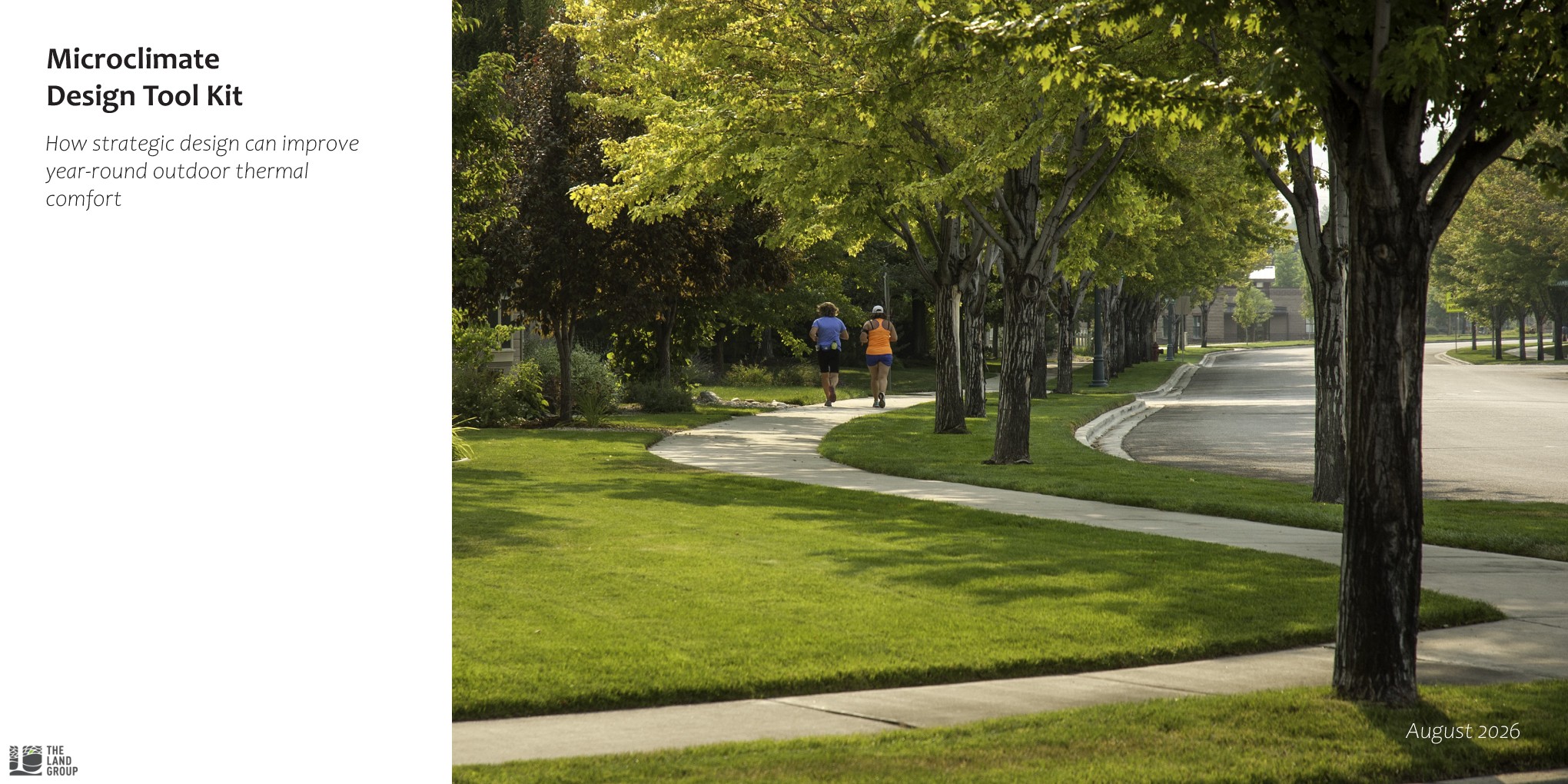
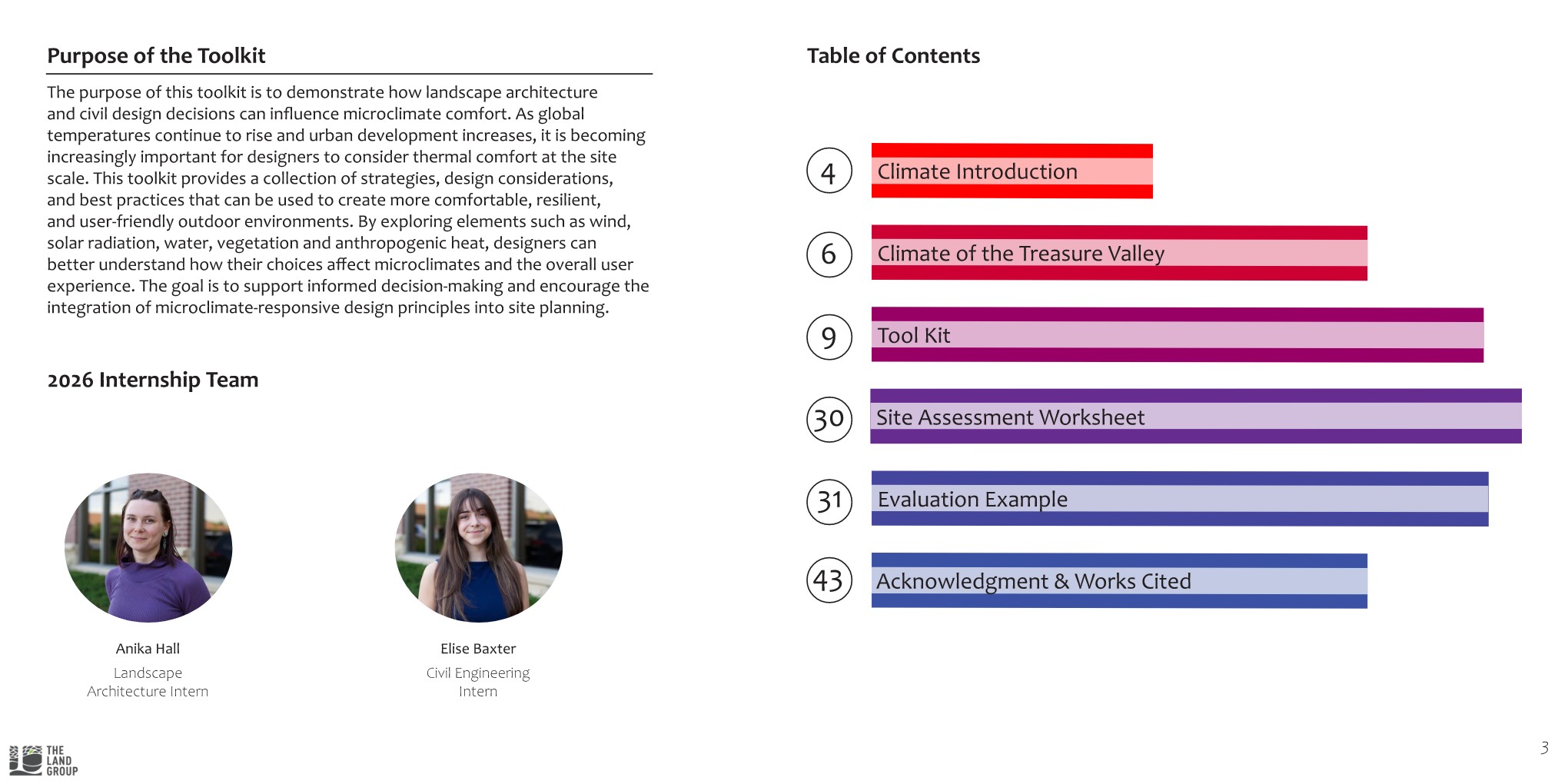
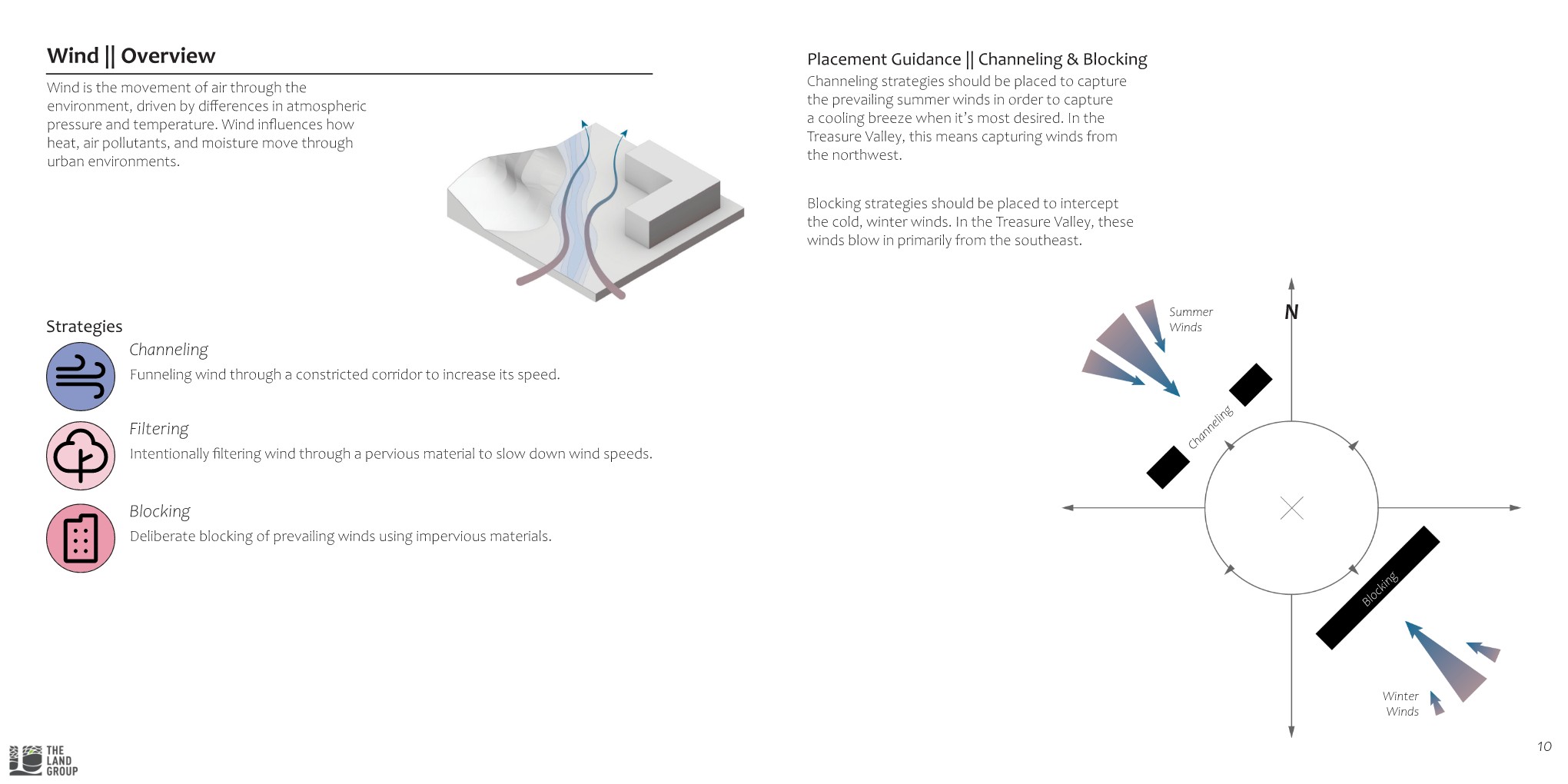
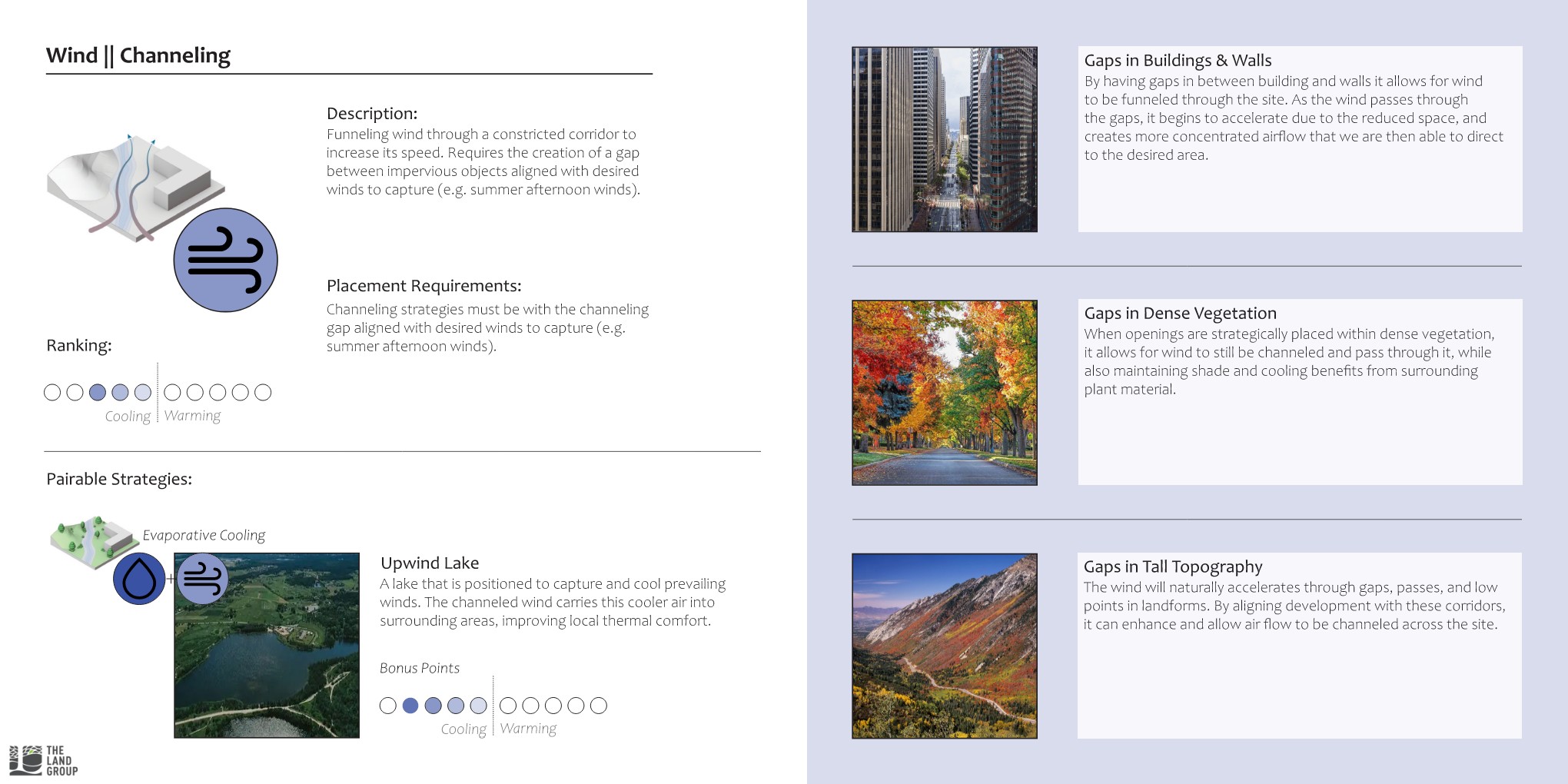
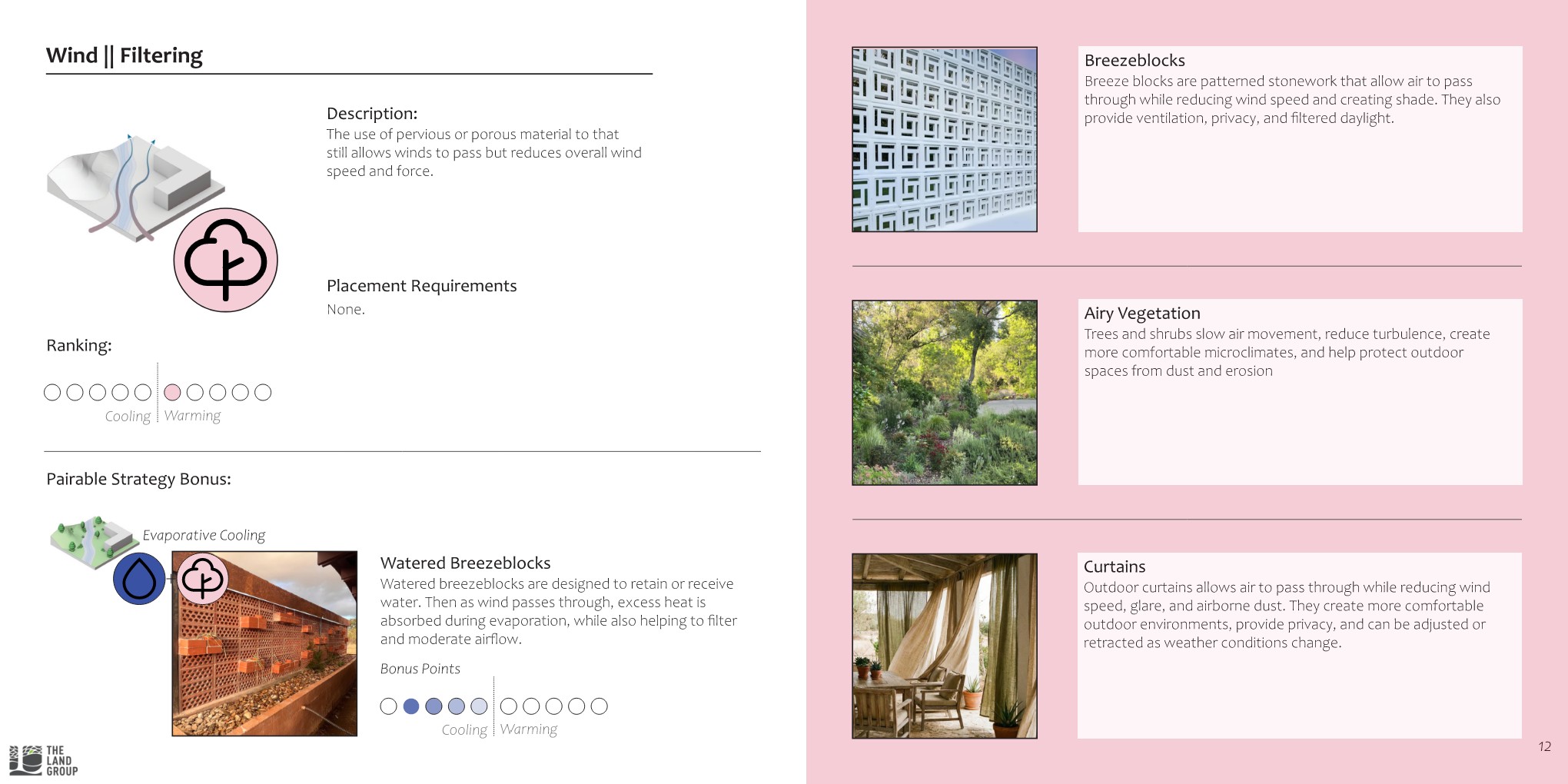
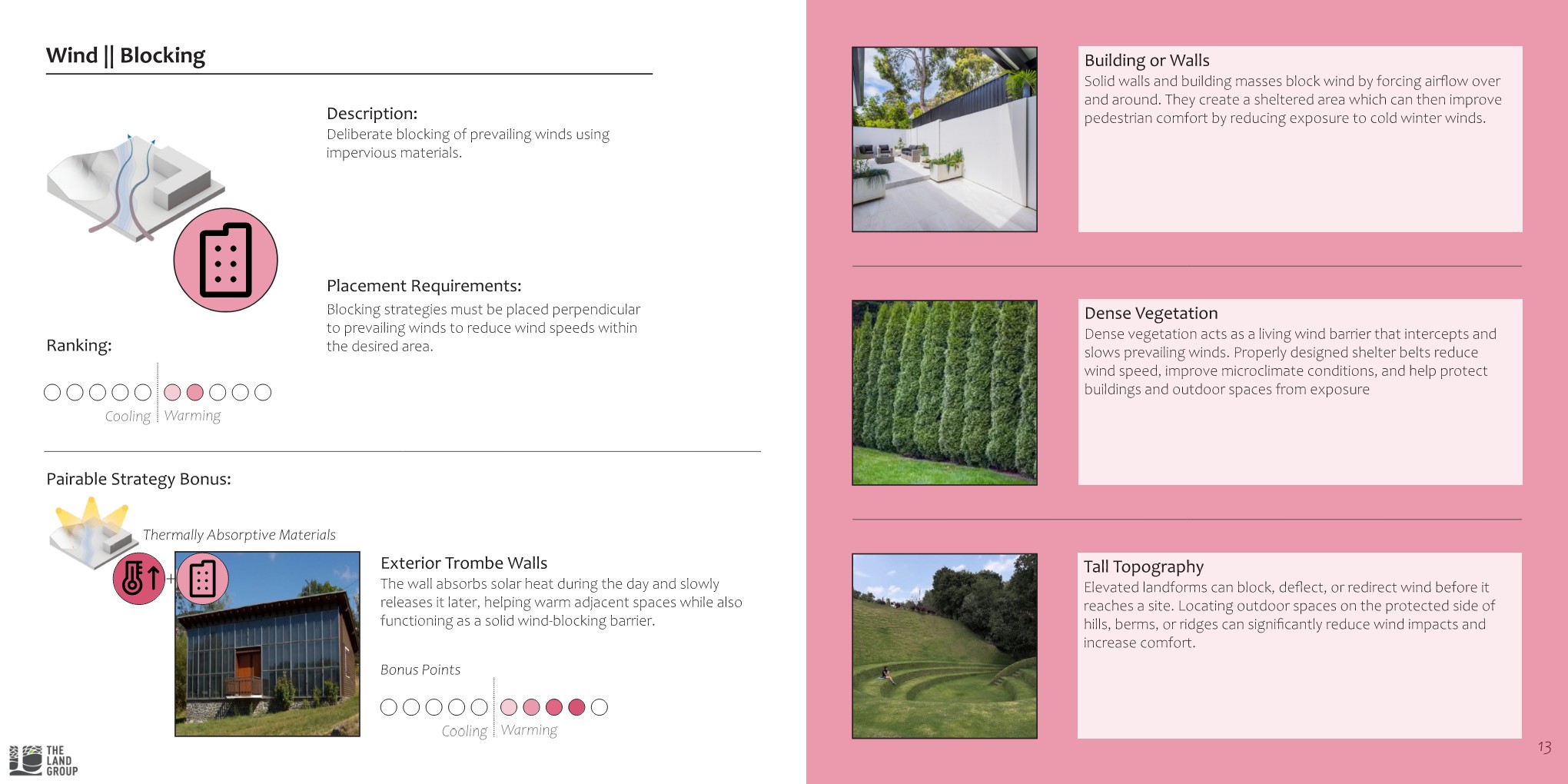
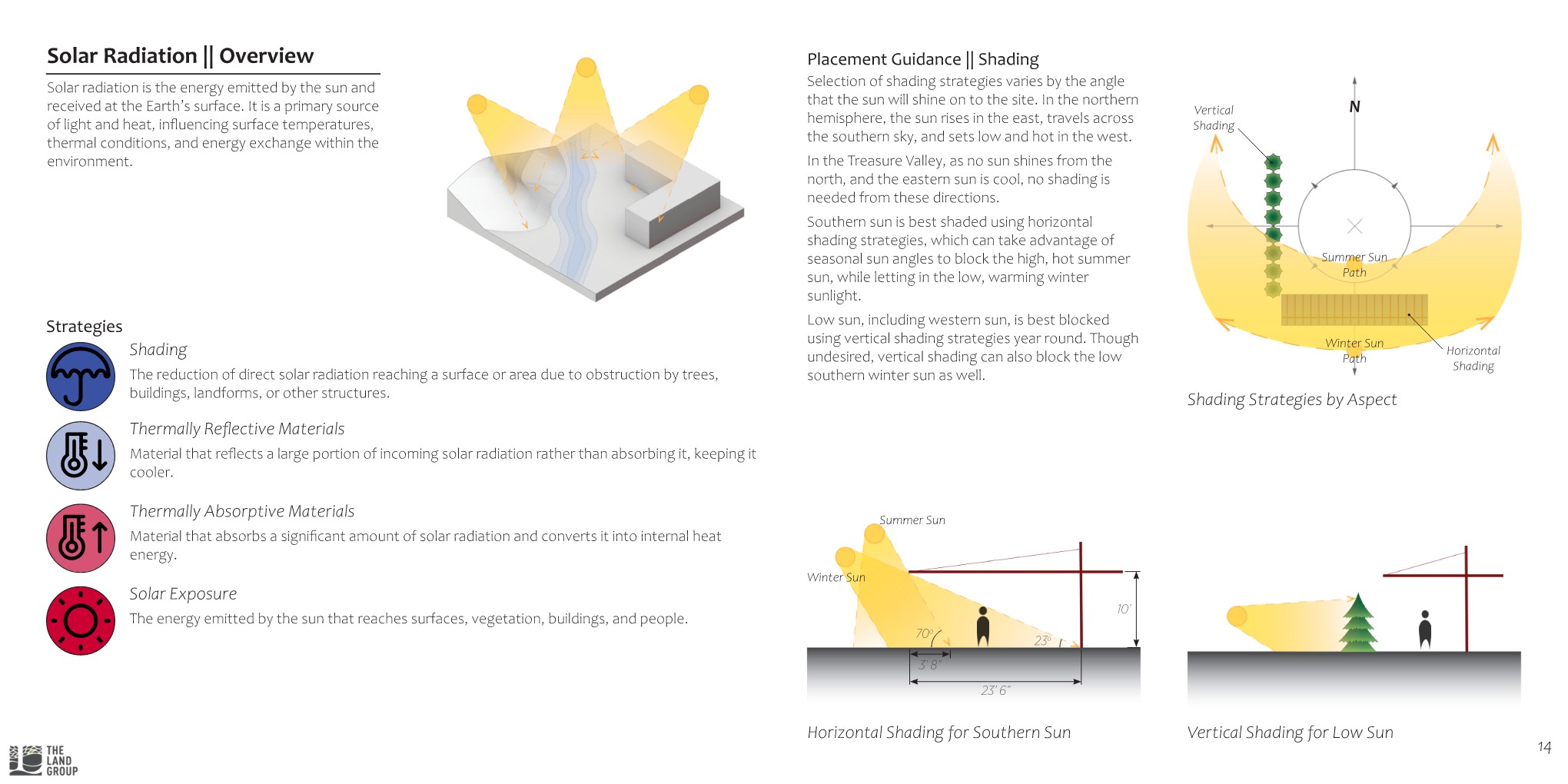
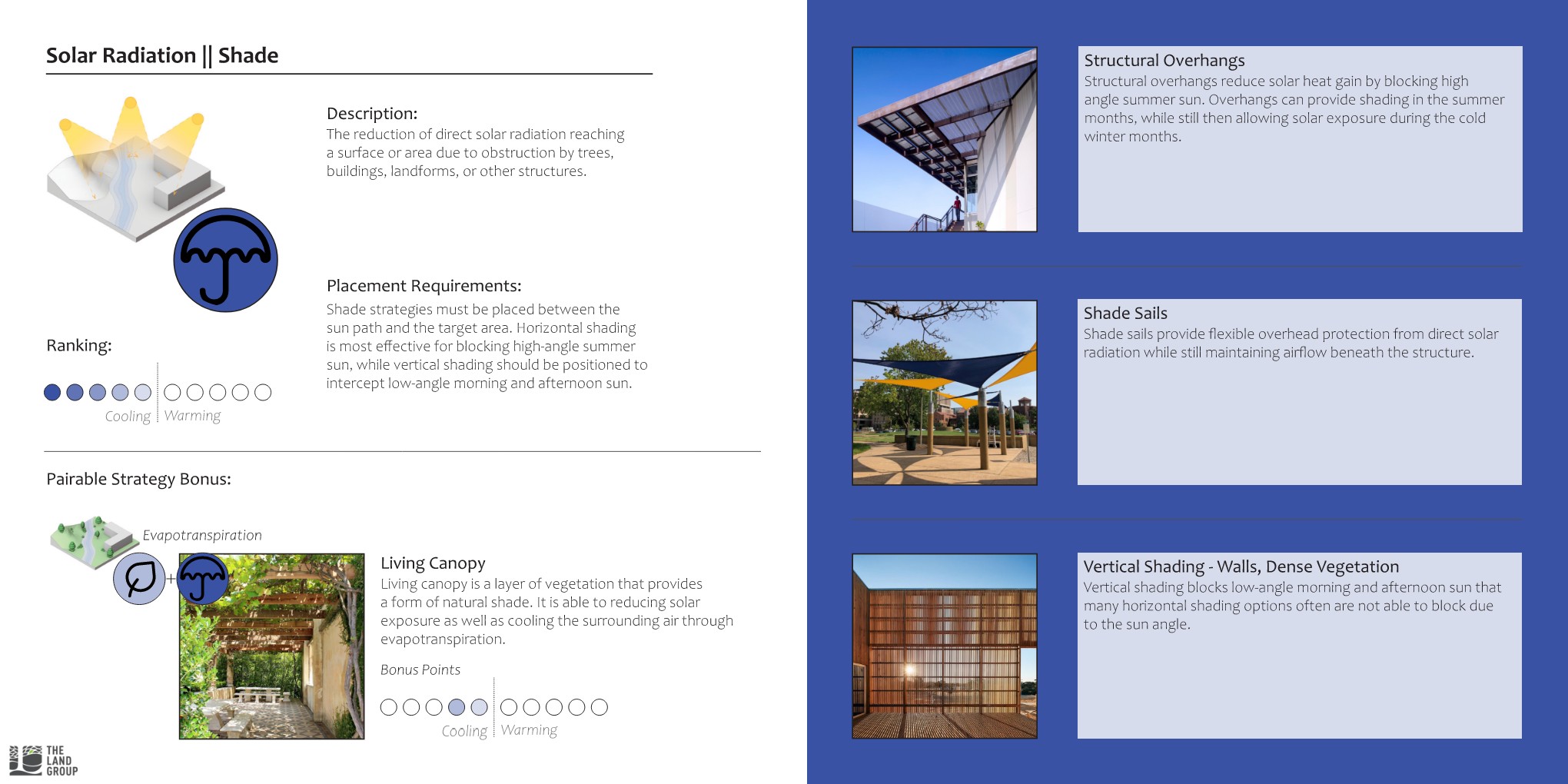
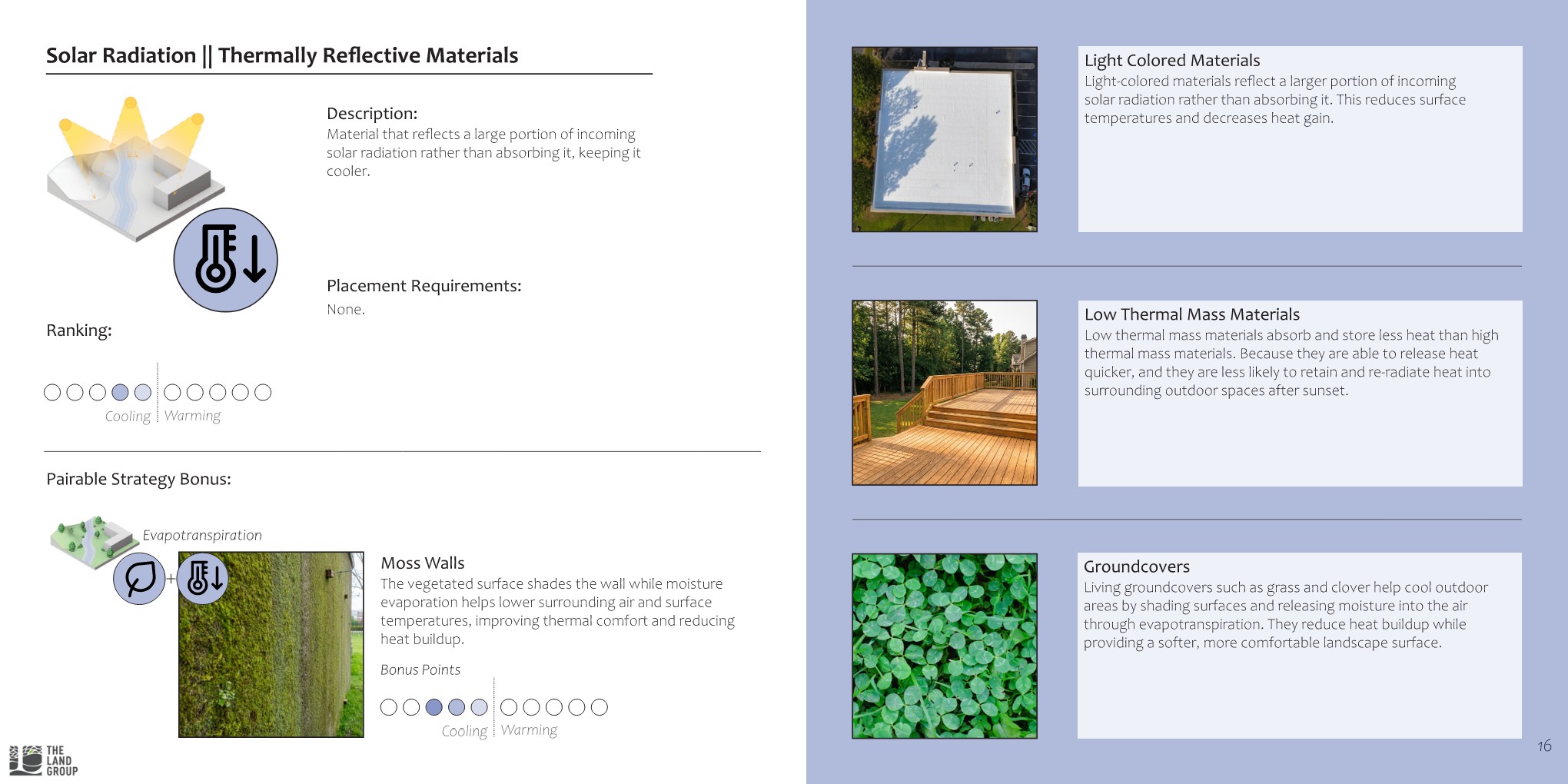
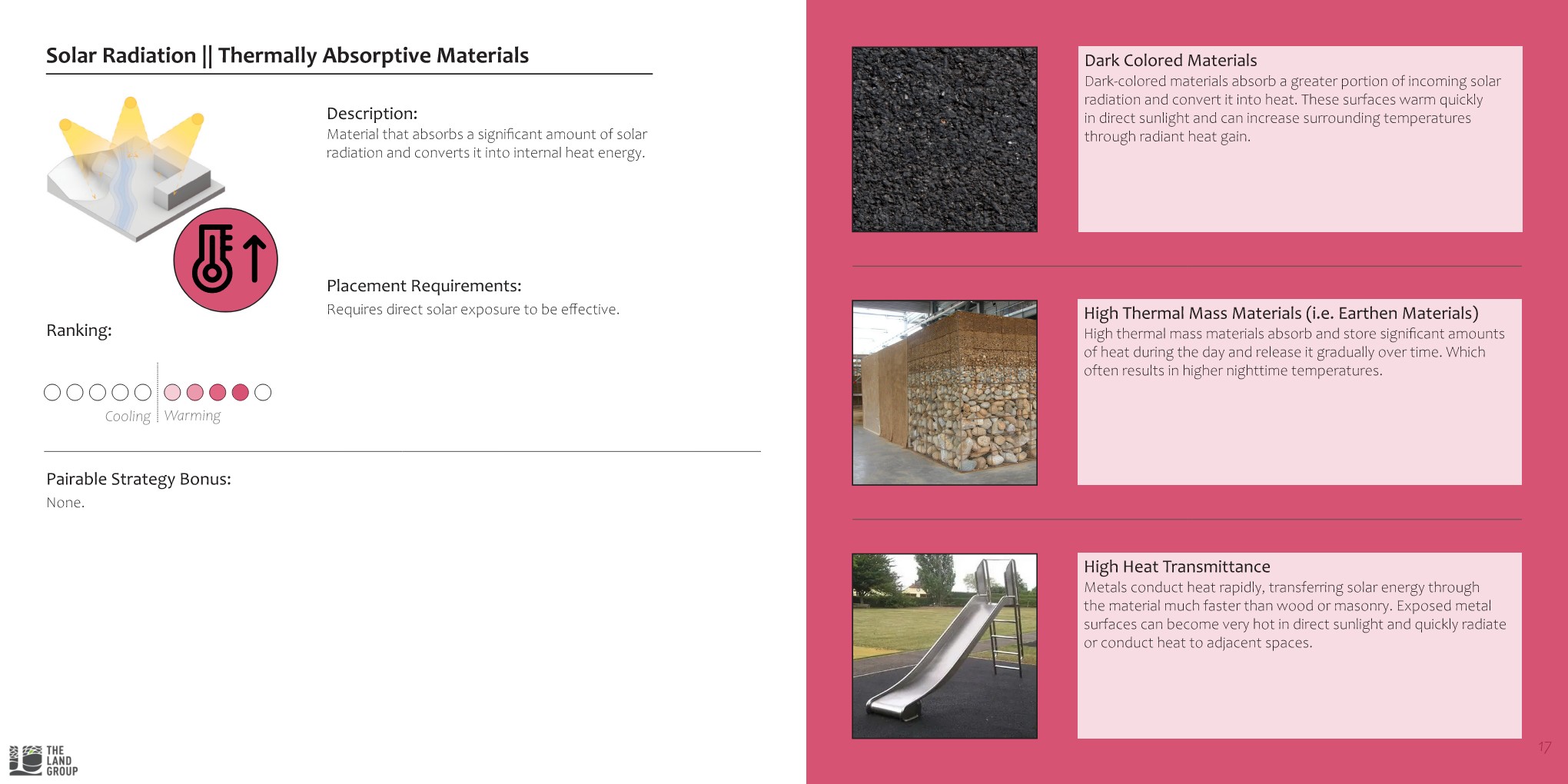
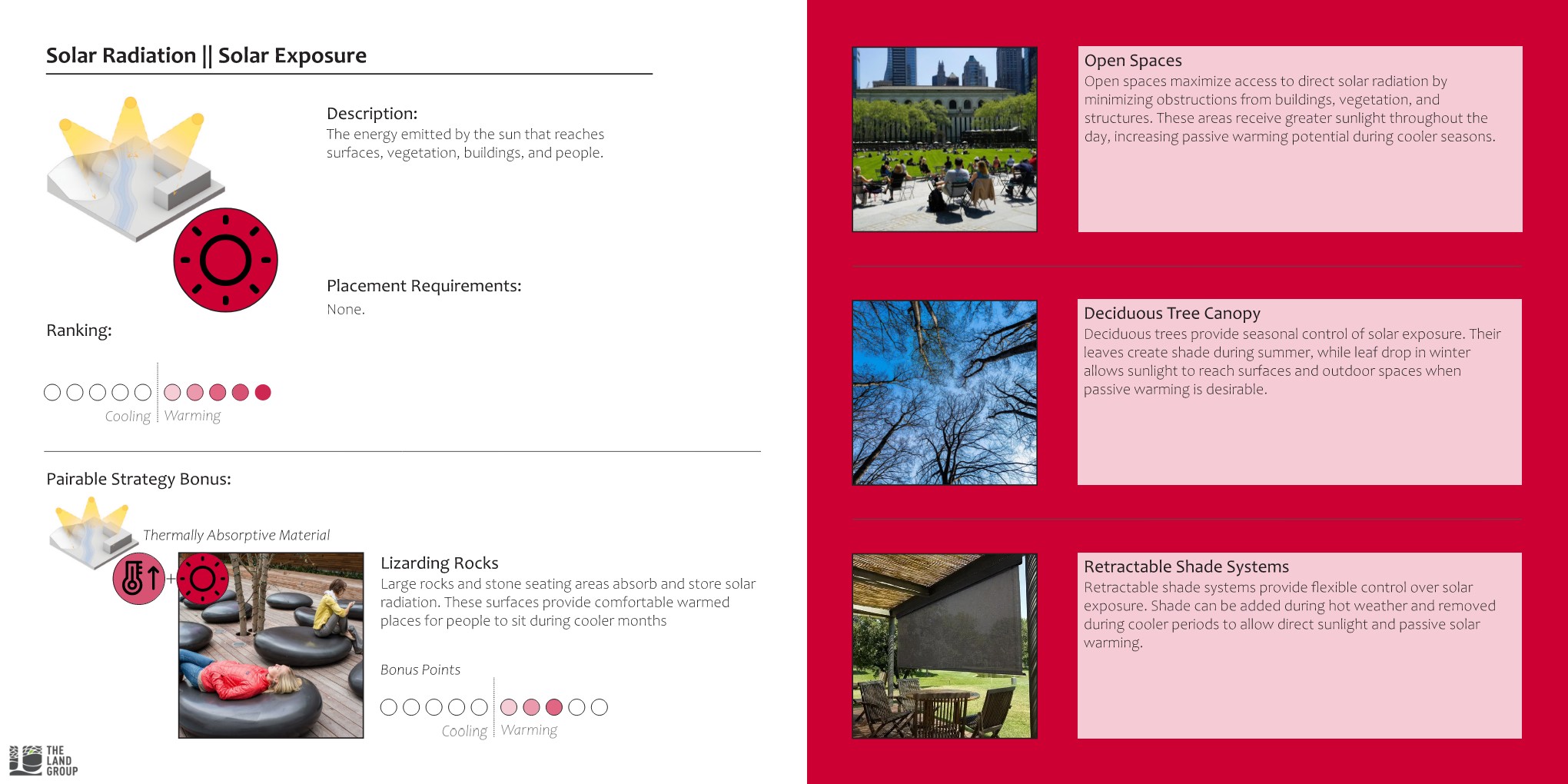
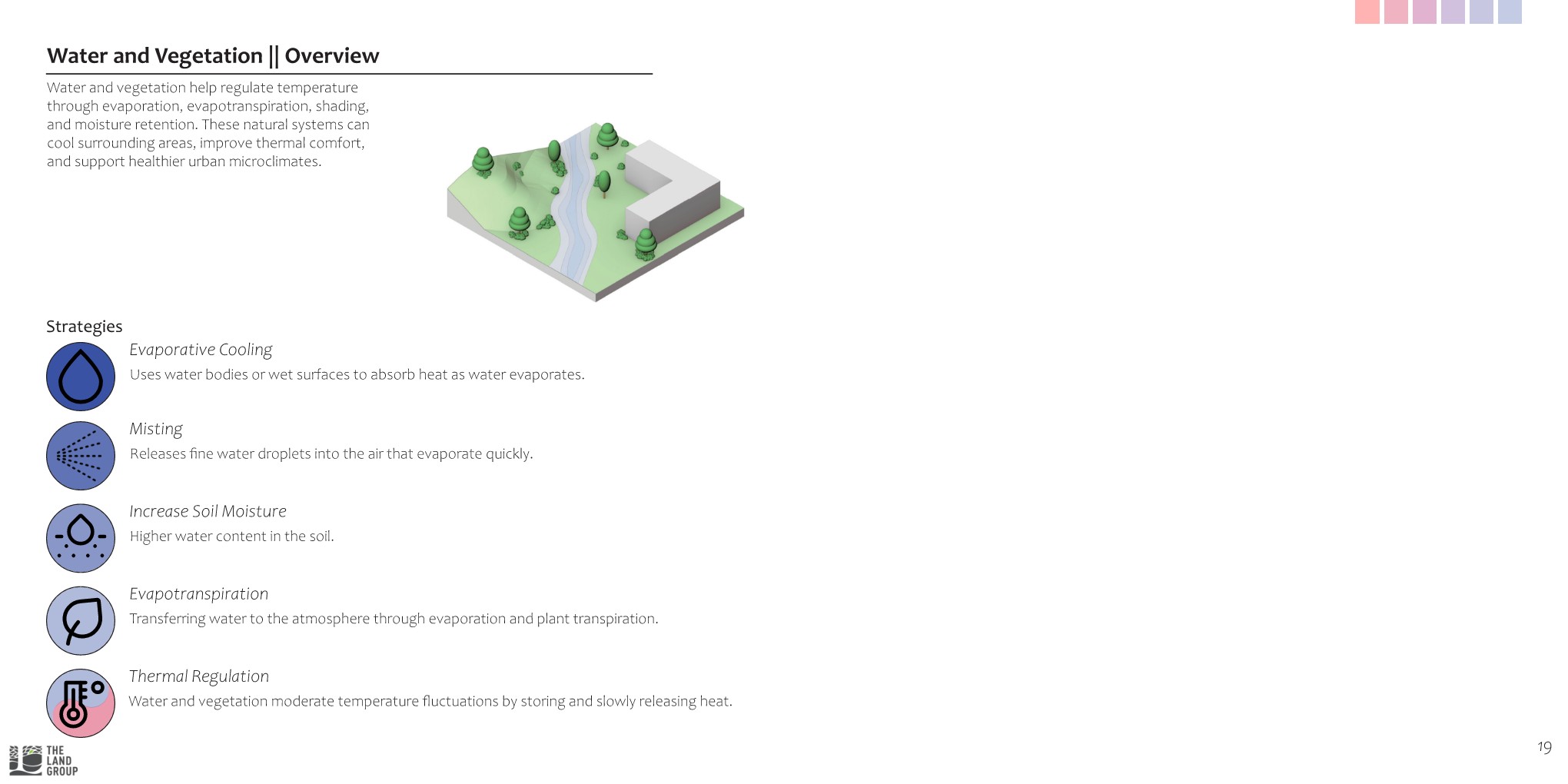
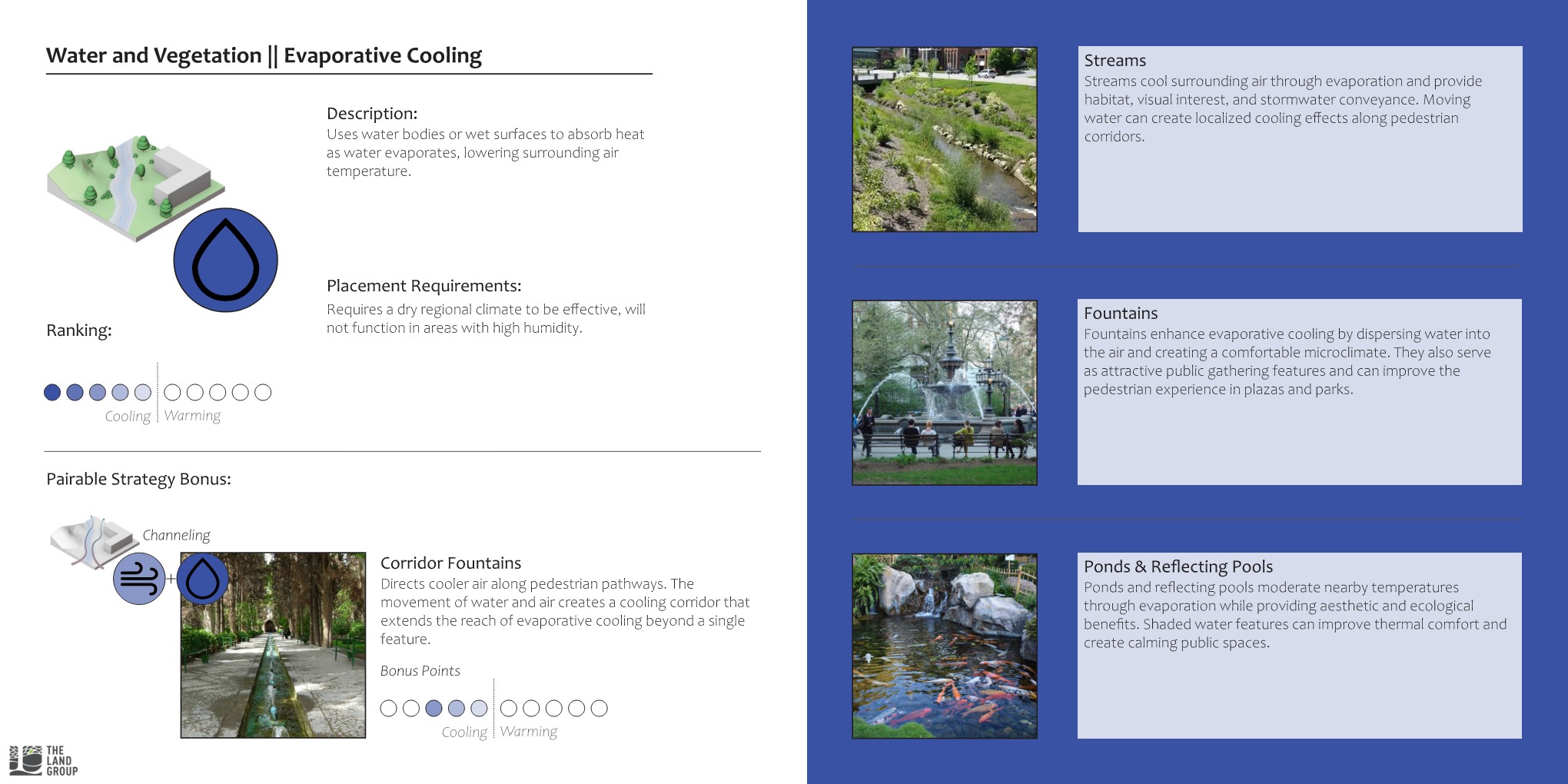
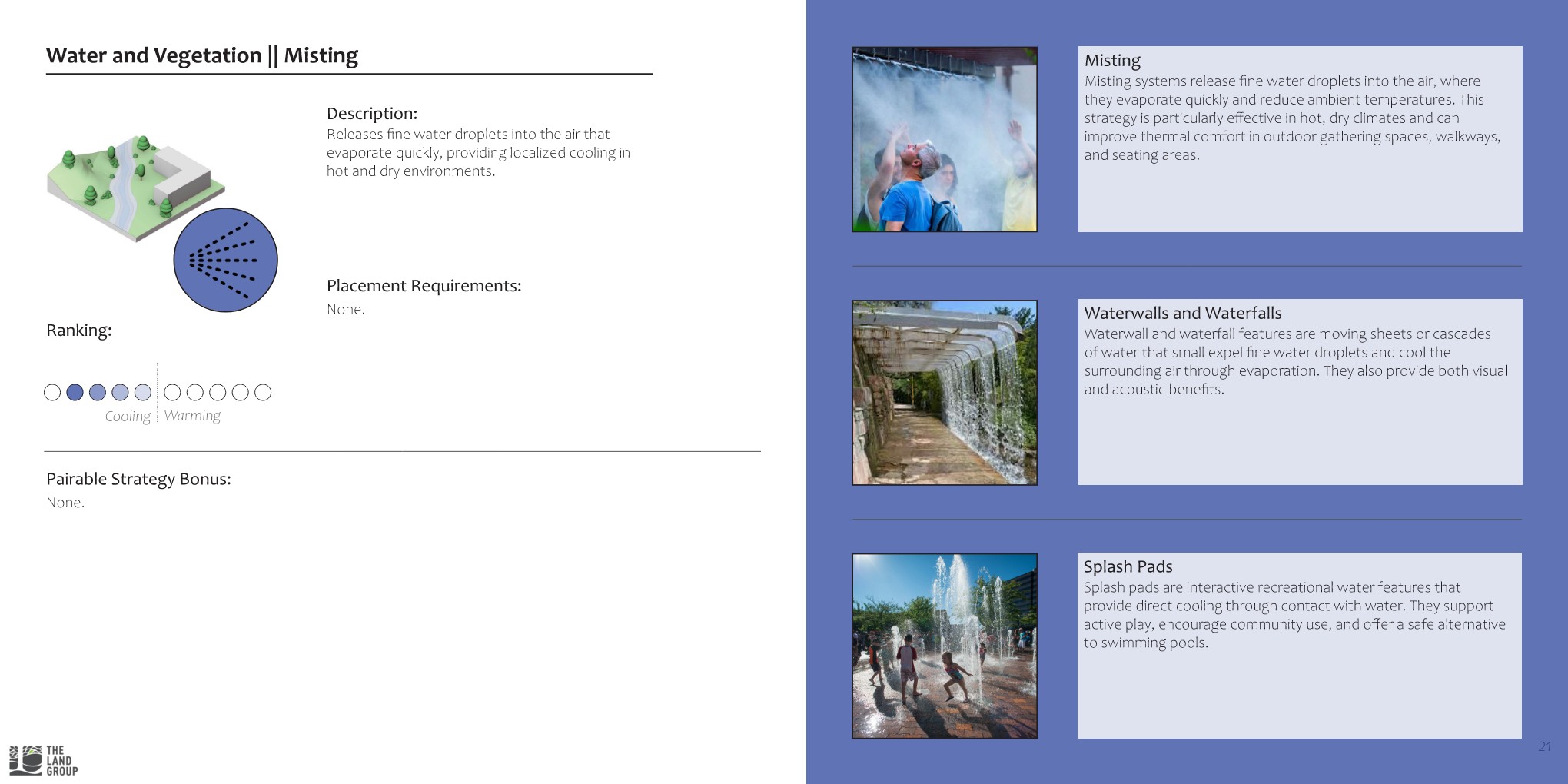
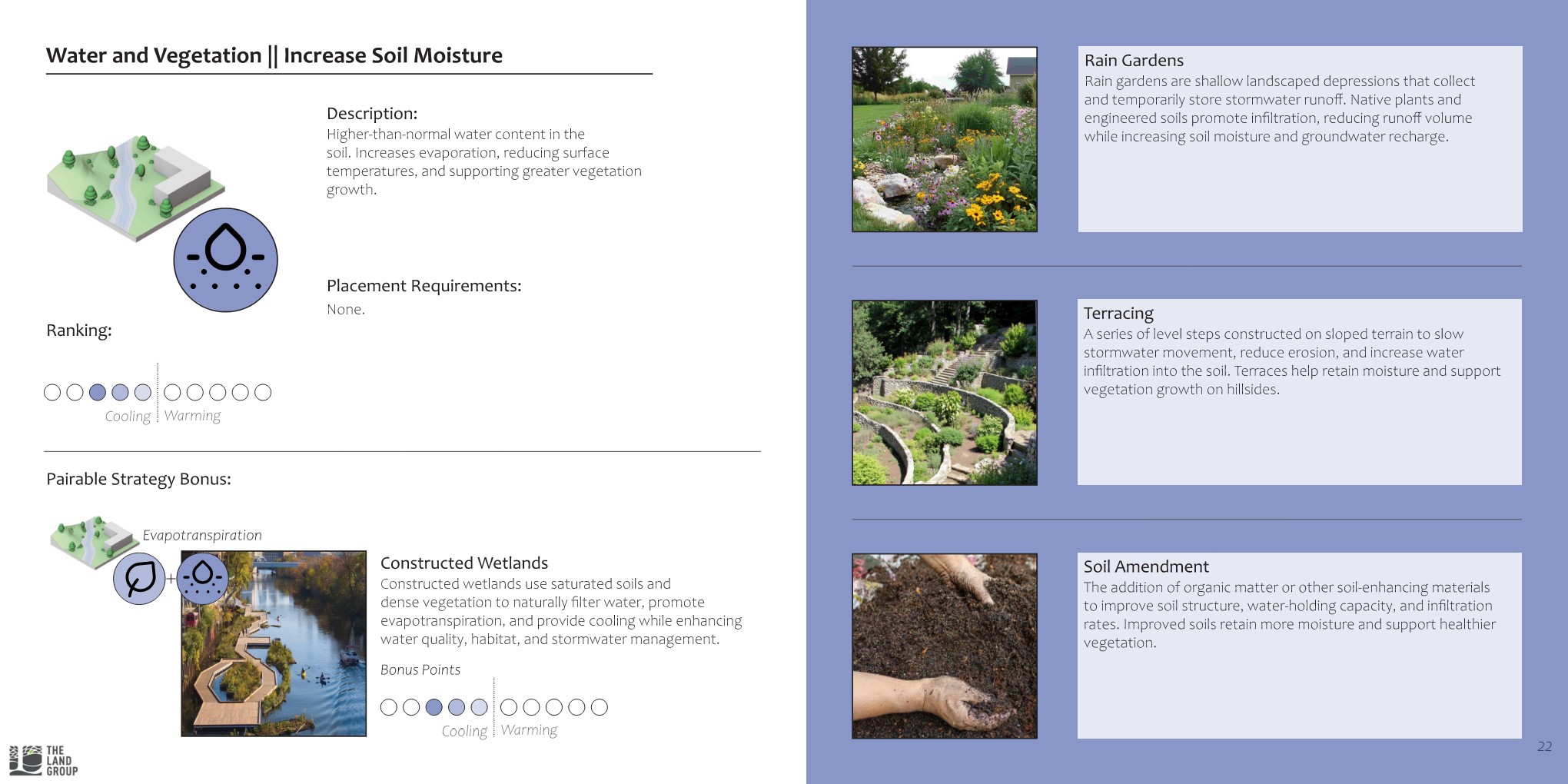
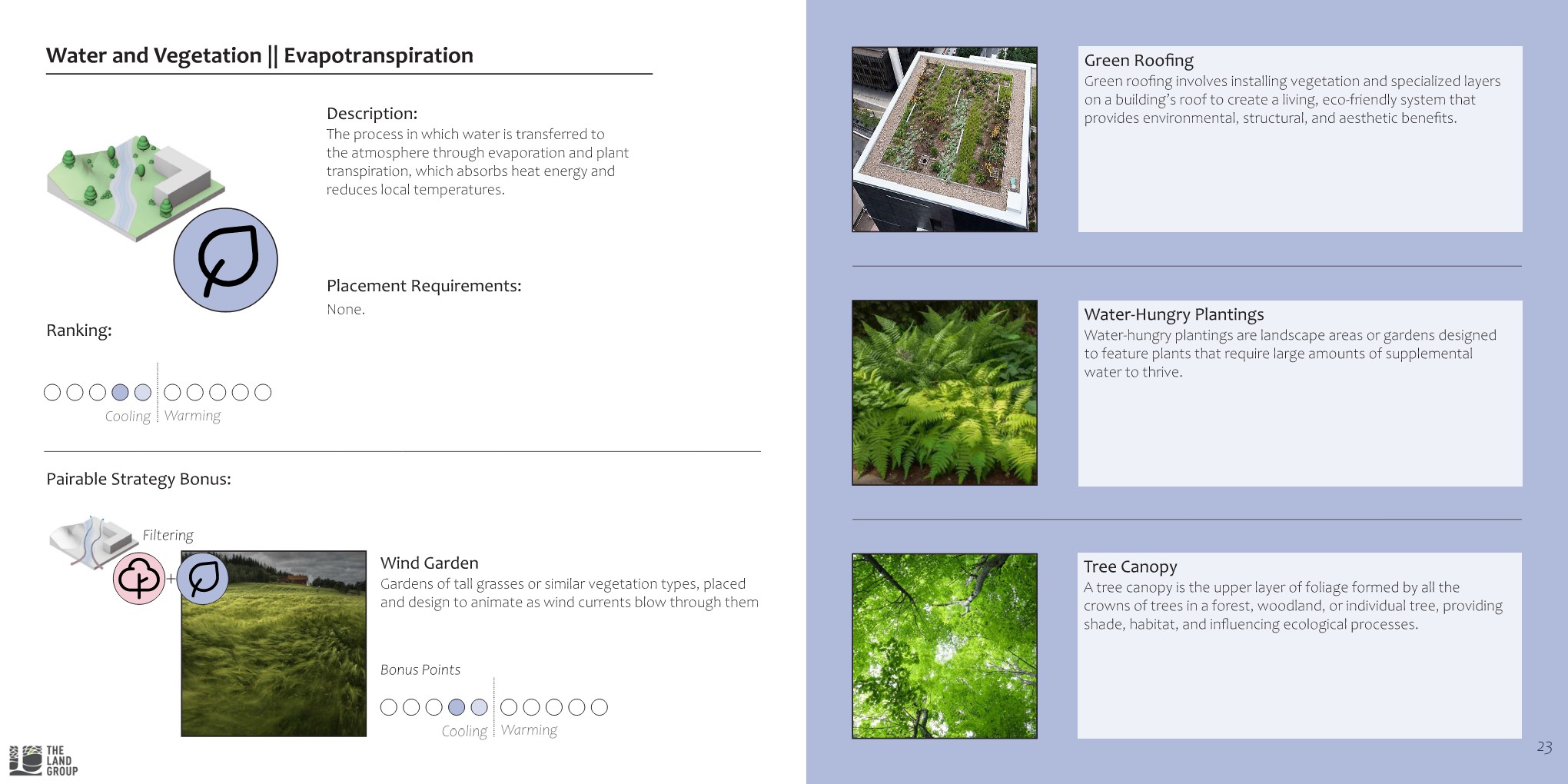
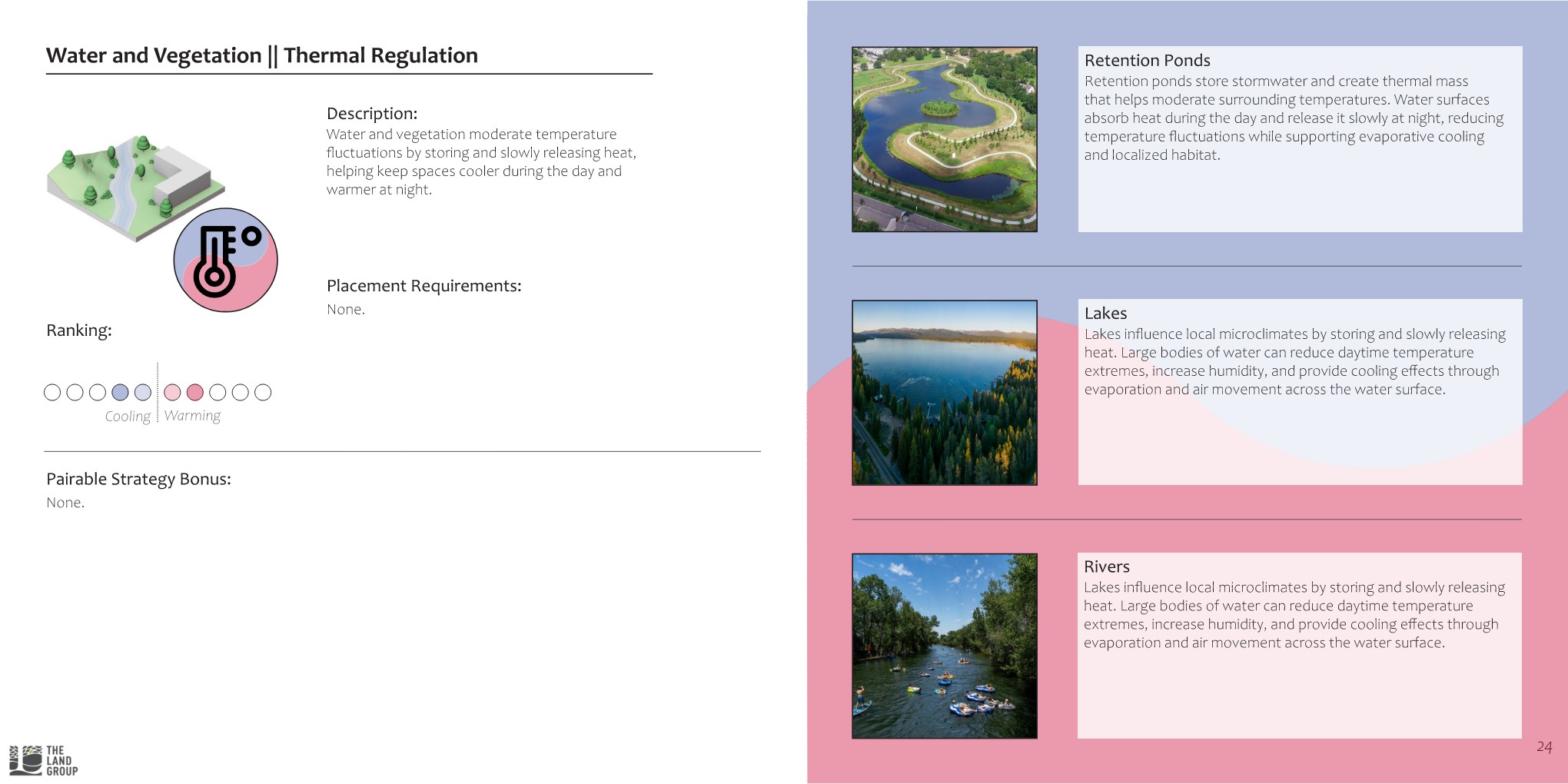
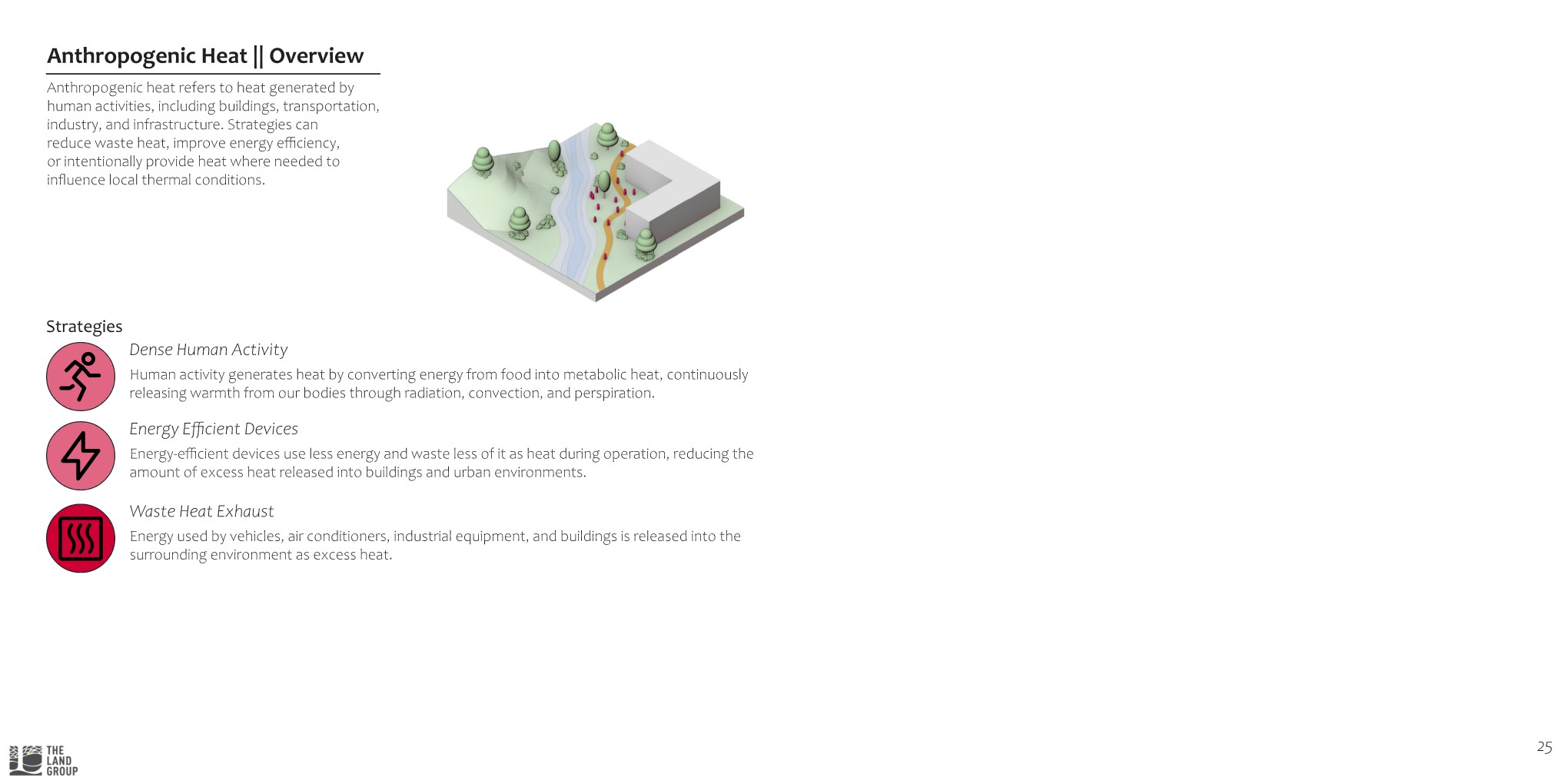
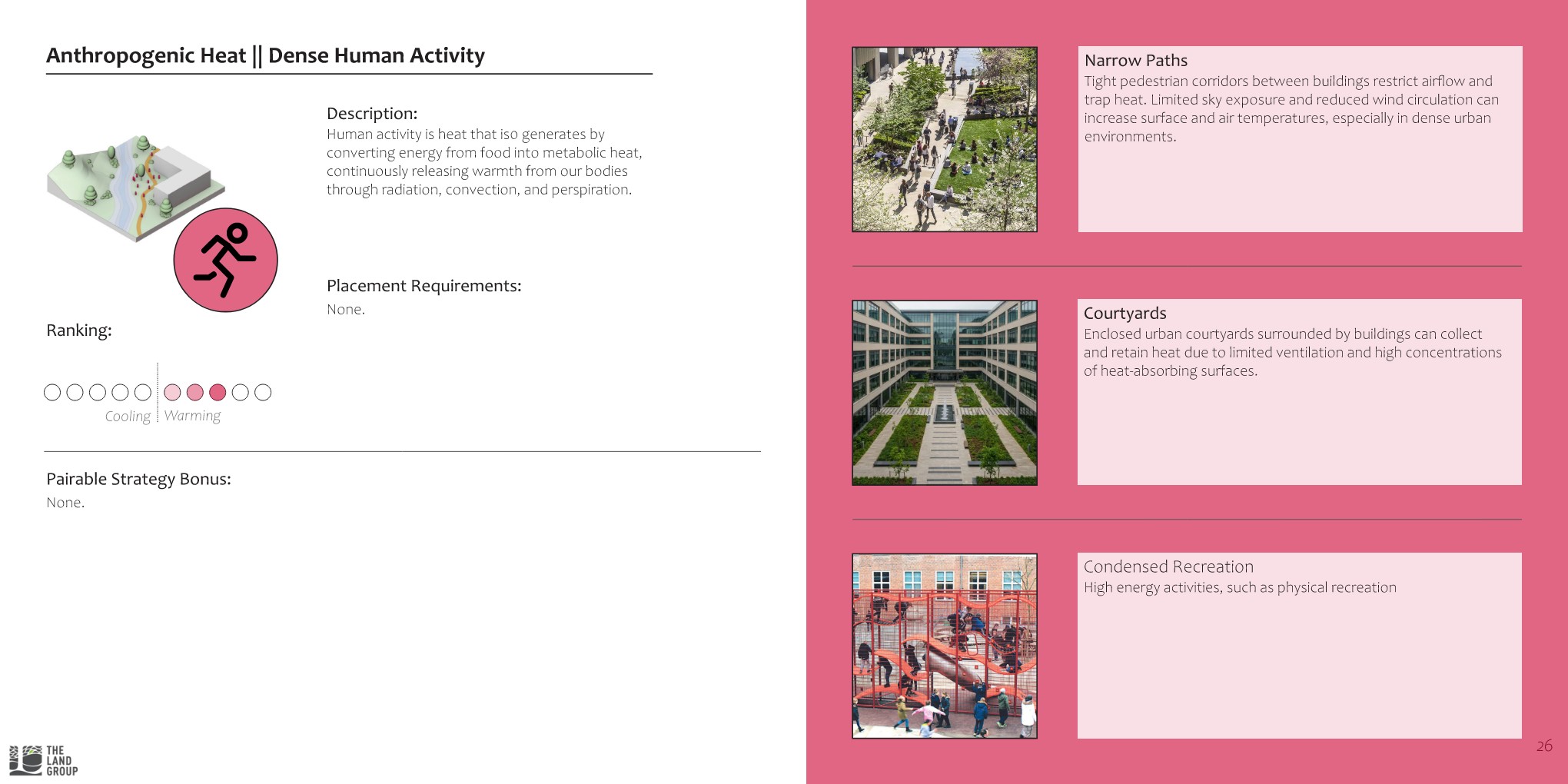
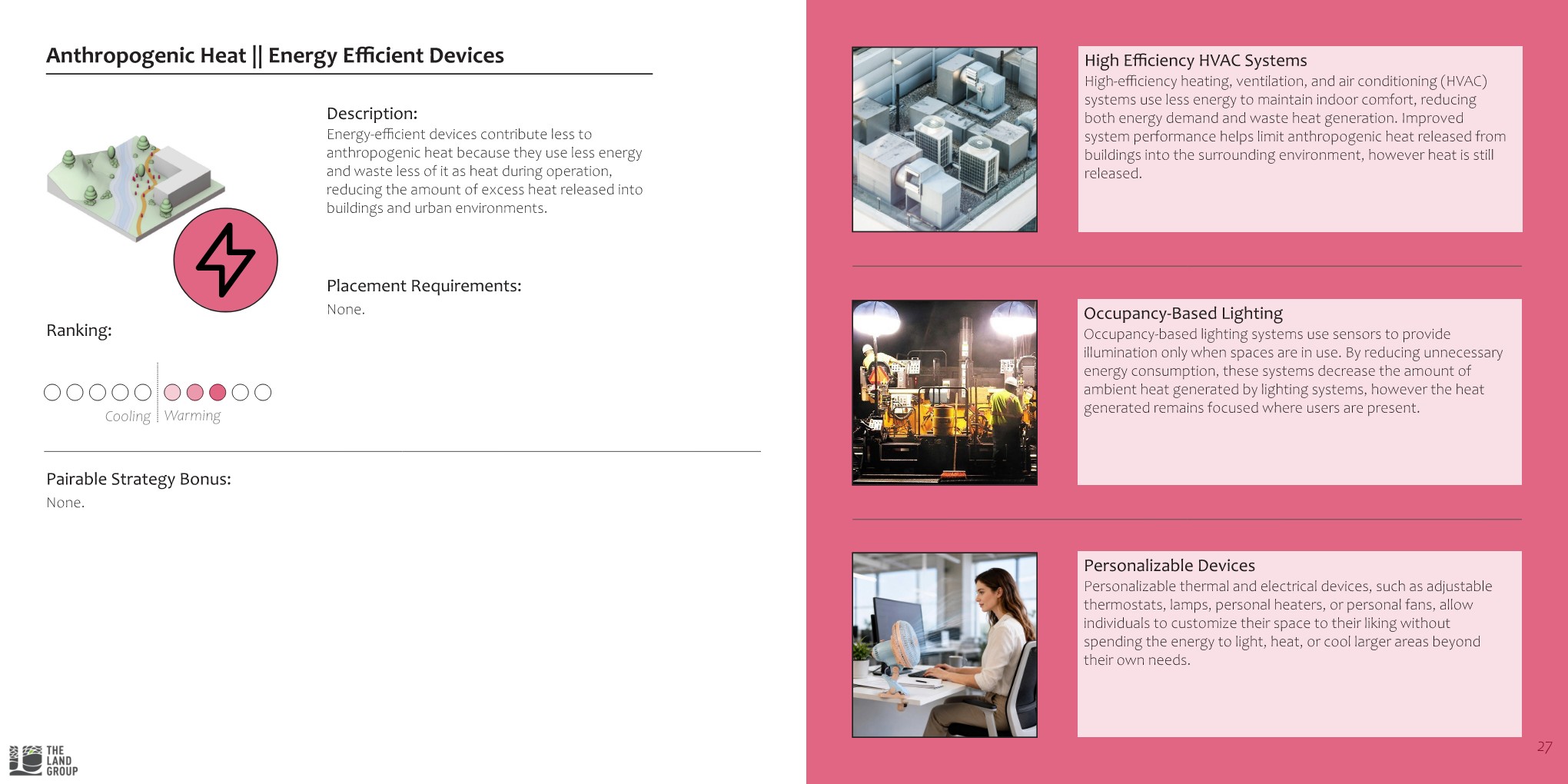
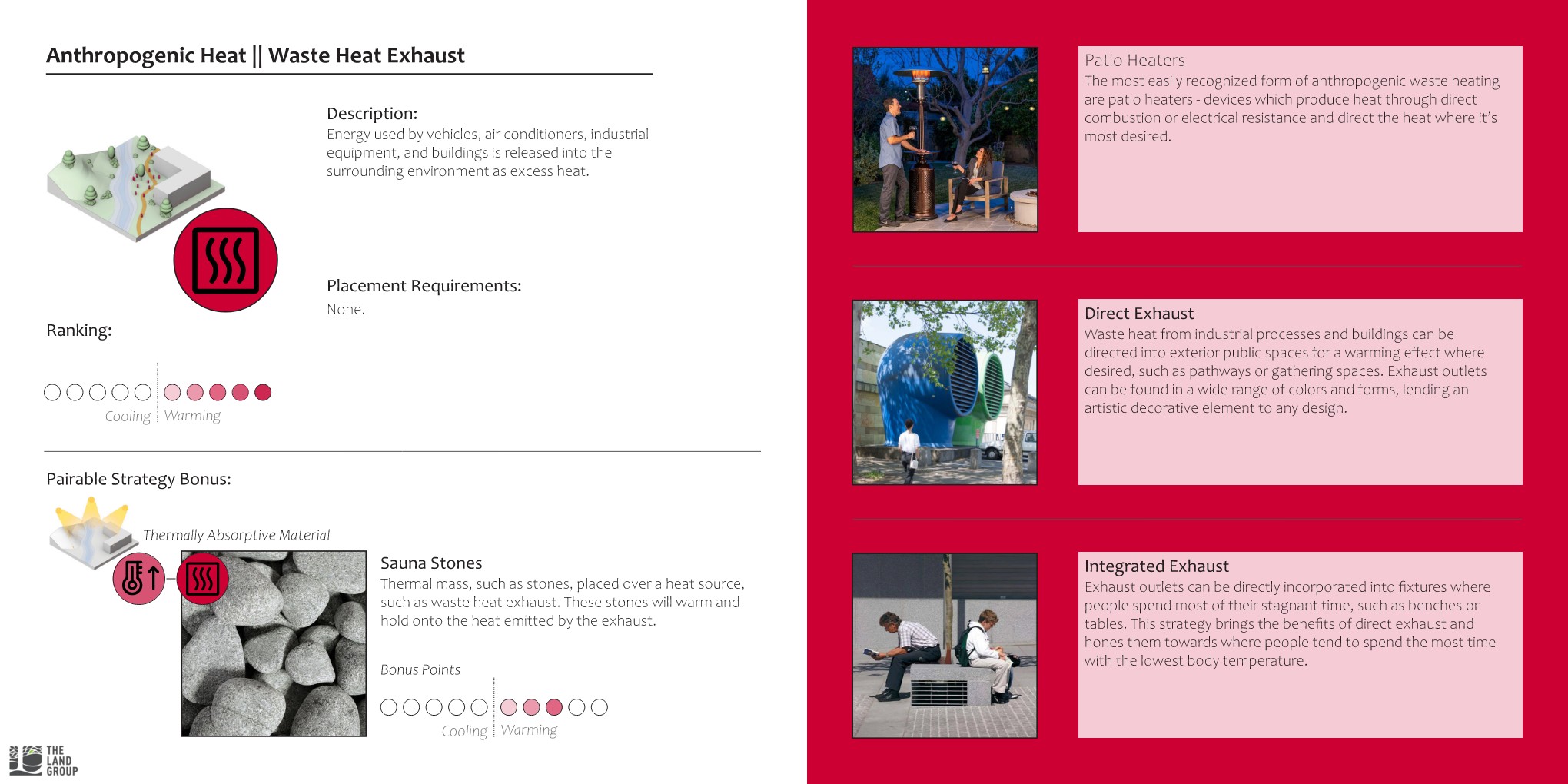
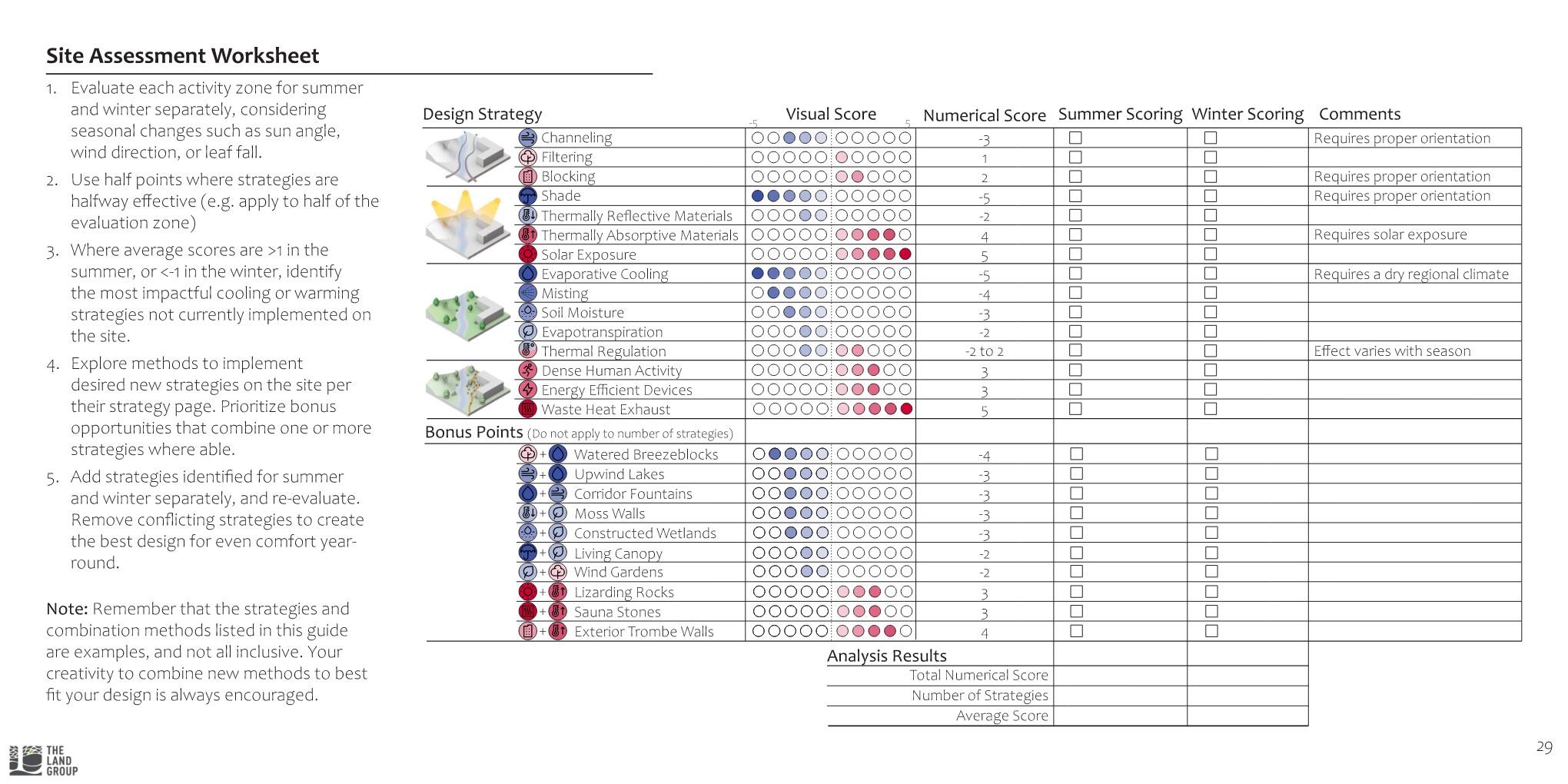
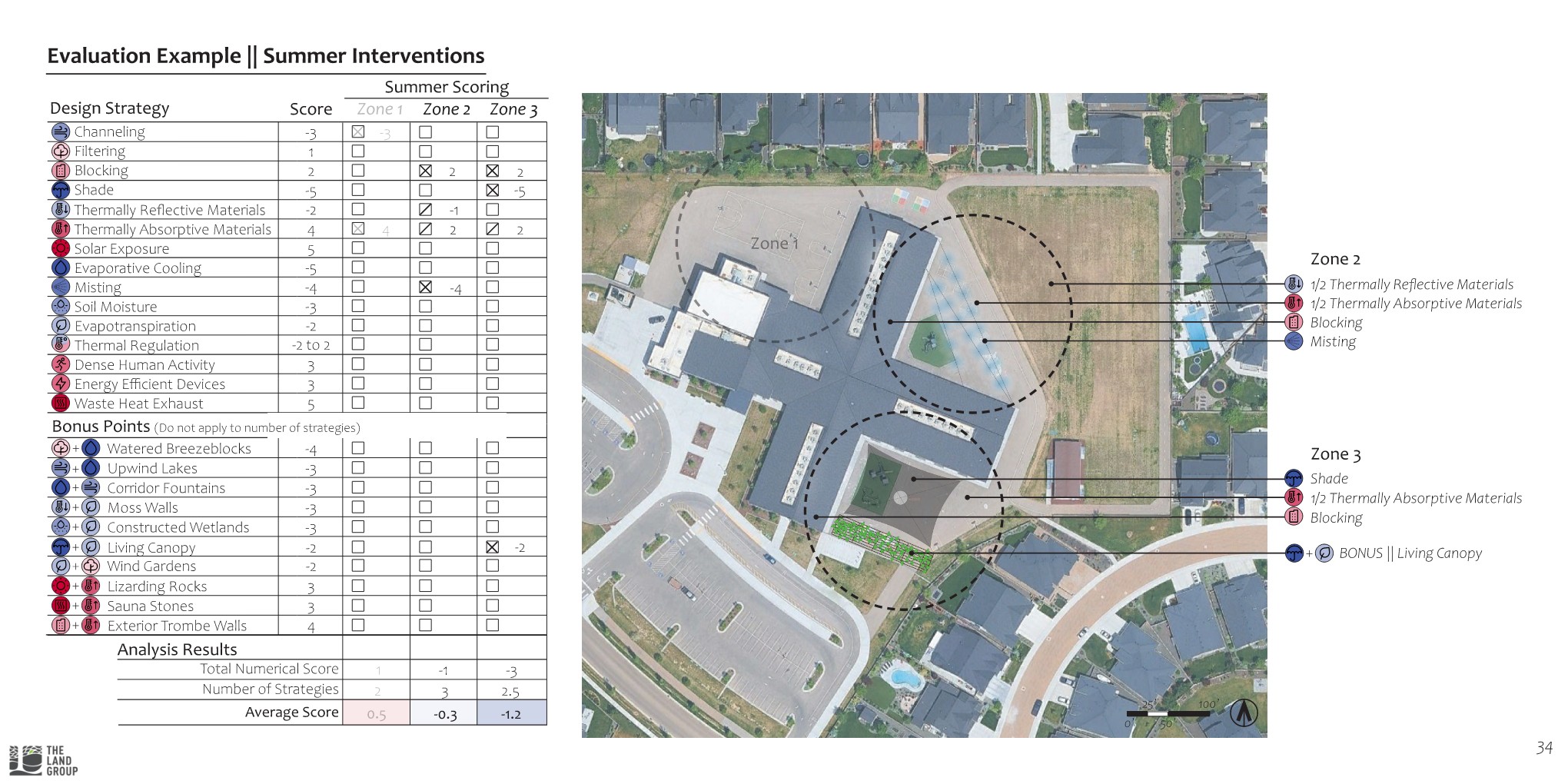
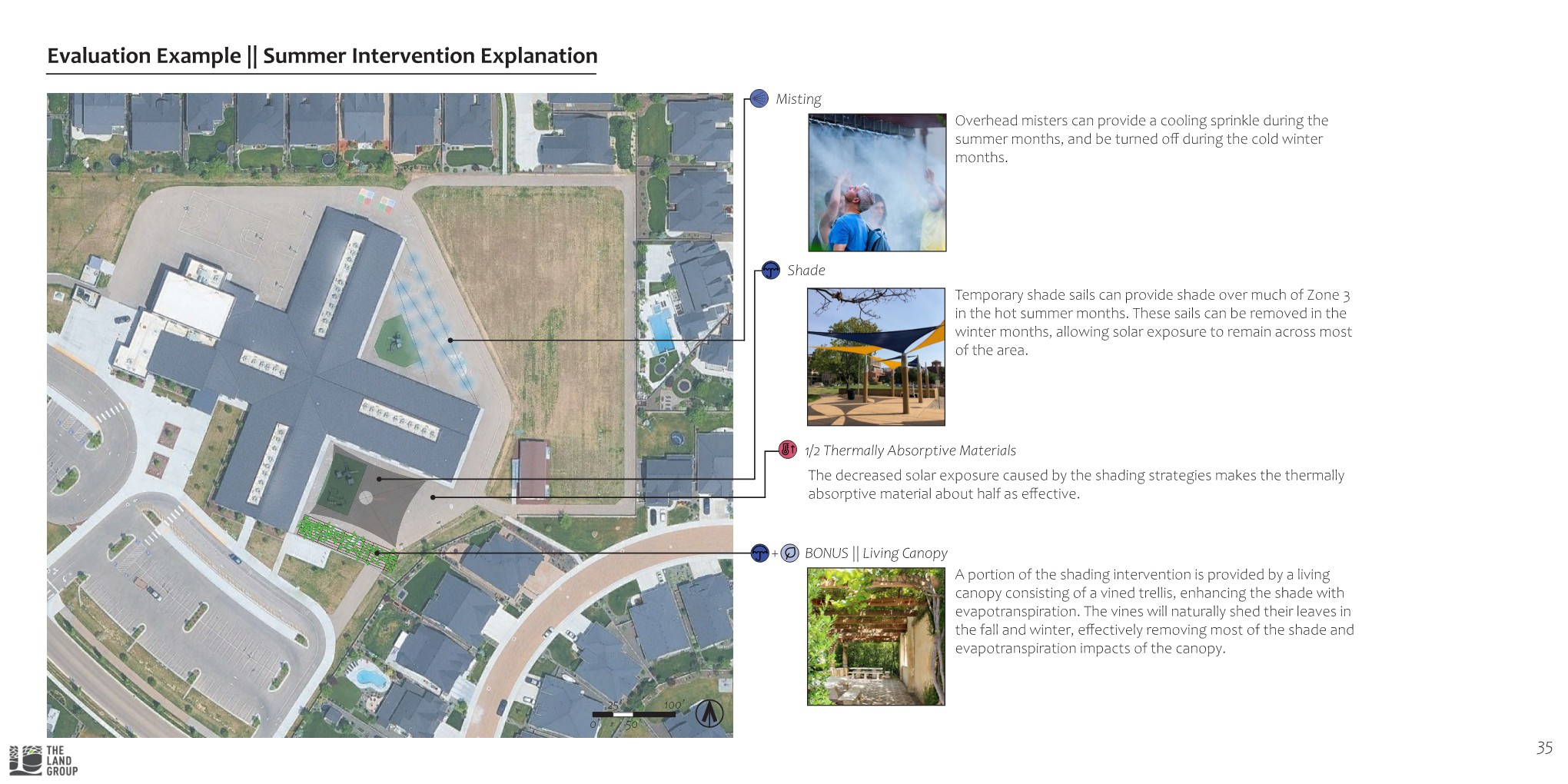
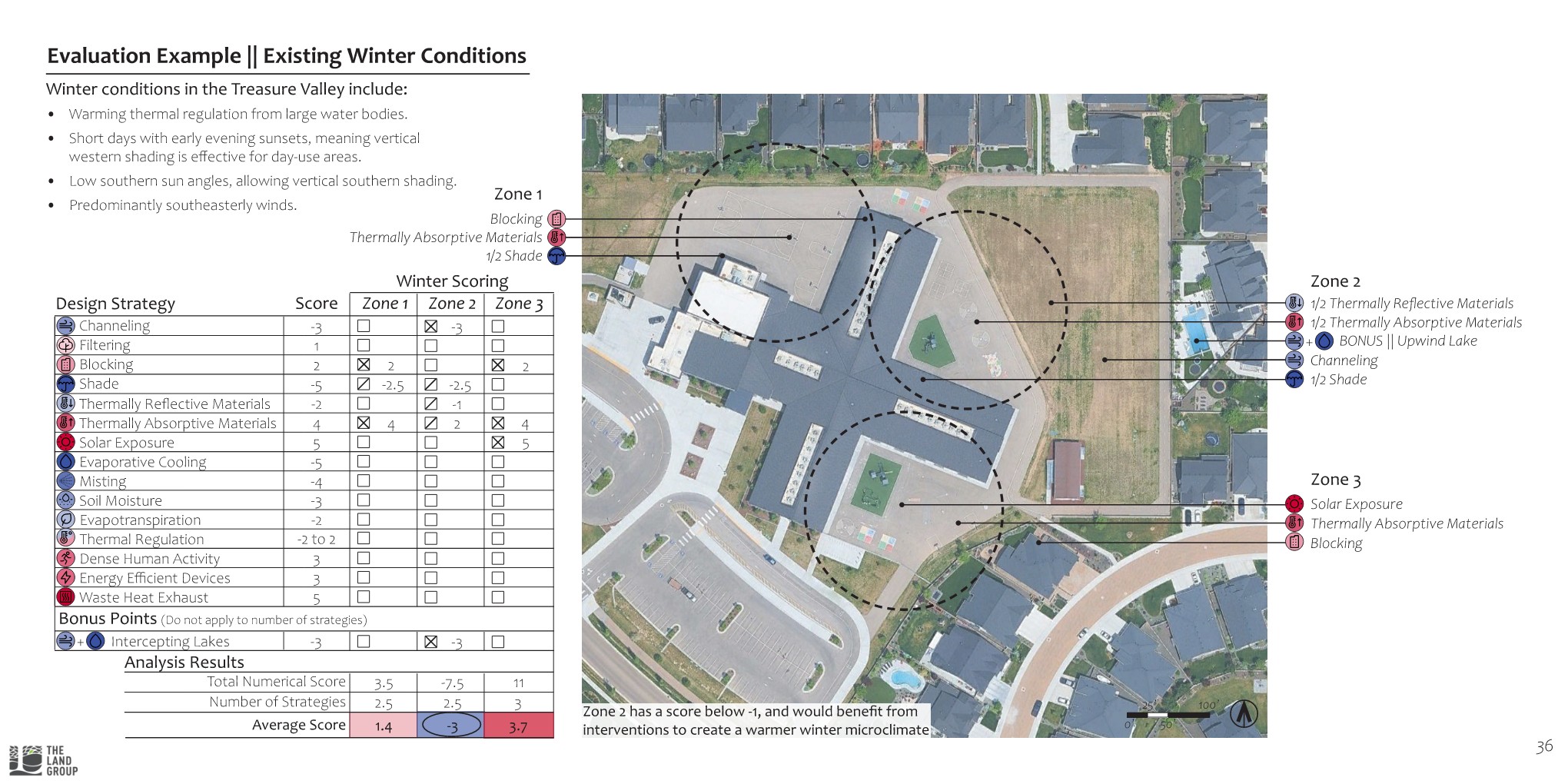
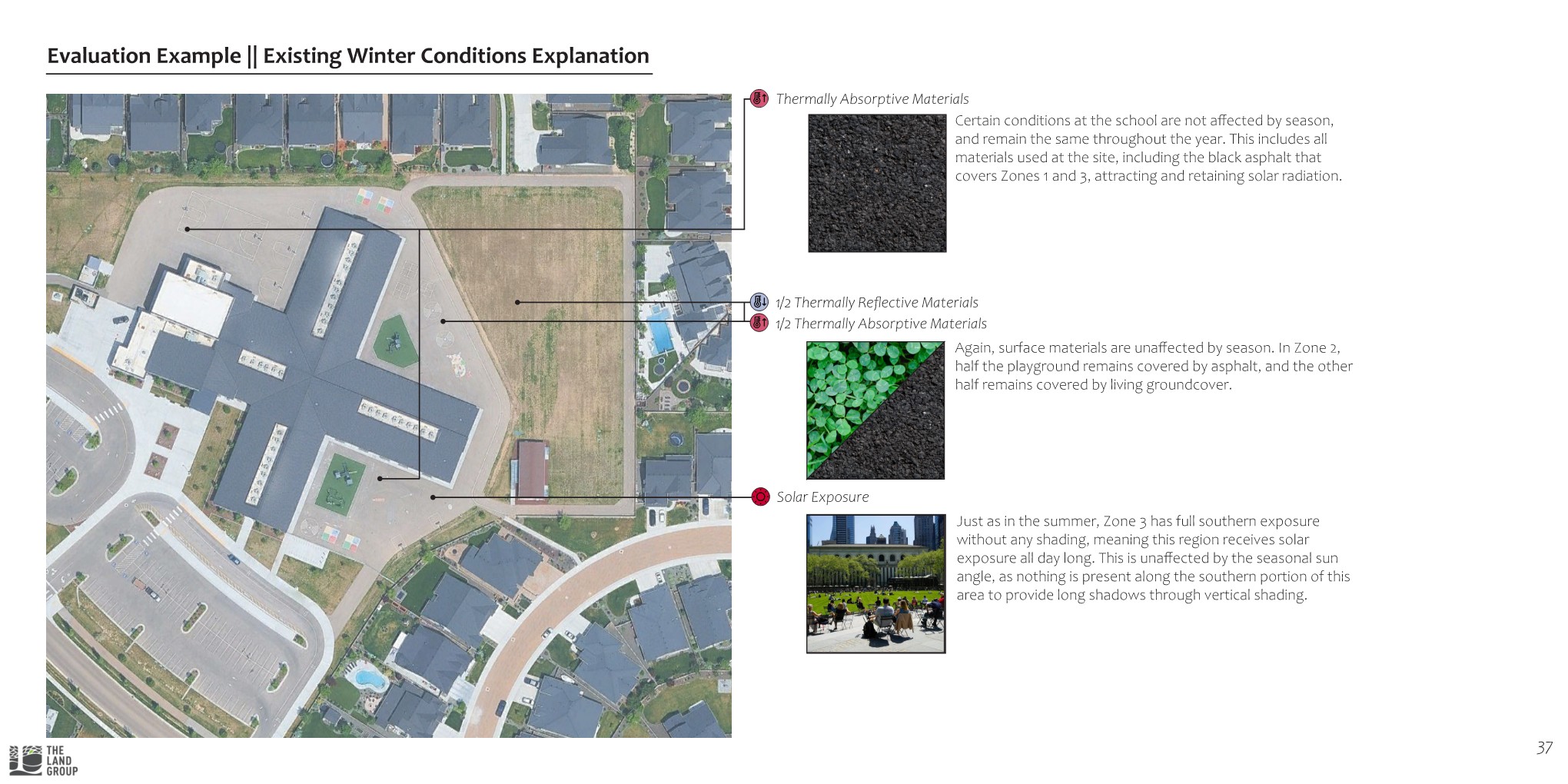
Designing places for people means thinking beyond how outdoor spaces look to how they feel, function, and support comfort throughout the year. The 2026 summer intern project developed a toolkit showing how landscape architecture and civil engineering design decisions influence thermal comfort at the site-scale. It offers strategies, design considerations, and best practices for creating comfortable, resilient, and user-friendly outdoor environments.
Details
Year Completed
2026
Expertise
The 2026 Summer Interns consisted of Anika Hall (Landscape Designer), and Elise Baxter (Civil Designer)
Partners
Cushing Terrell, TLG research project team
Context
context
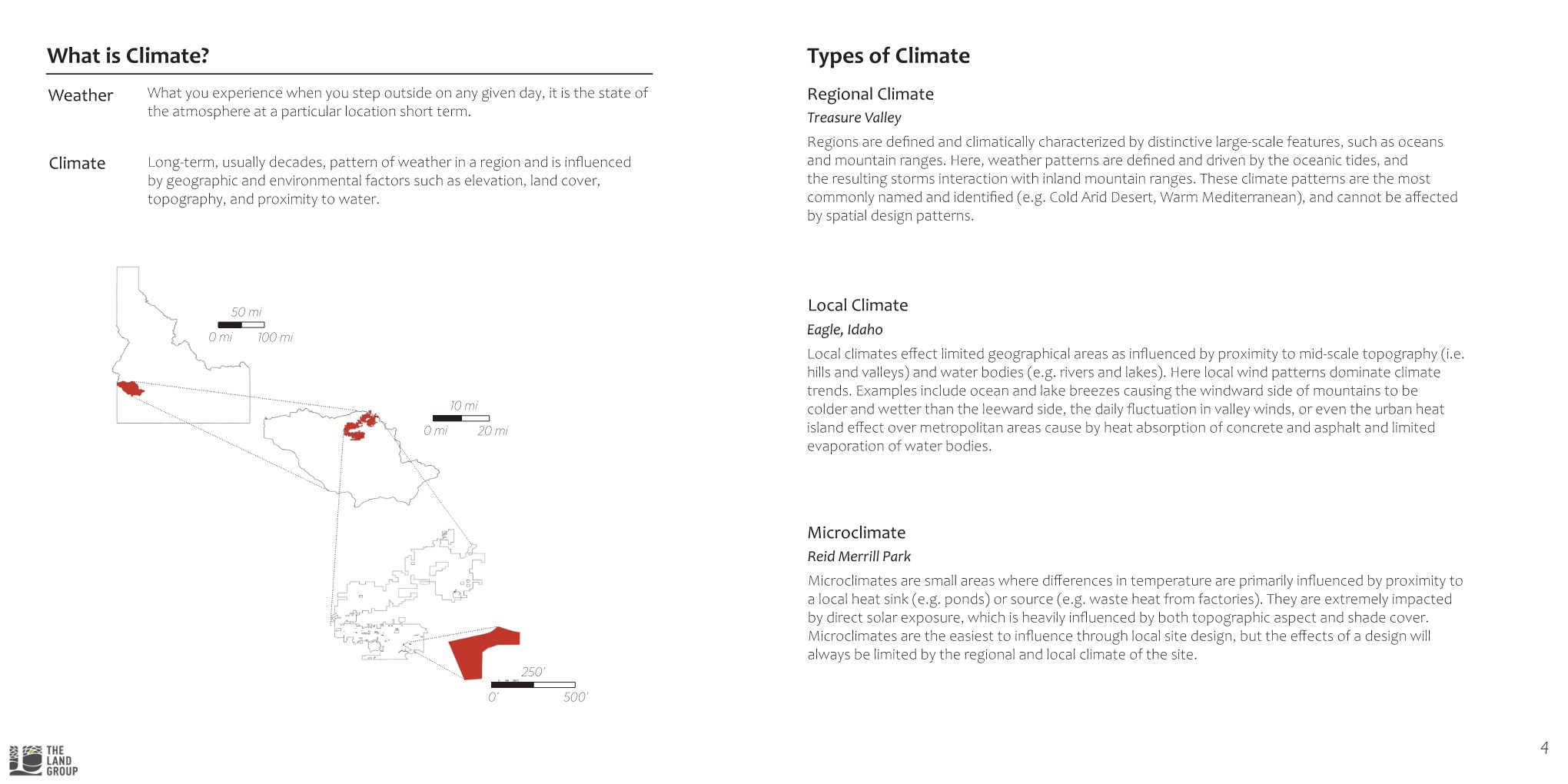
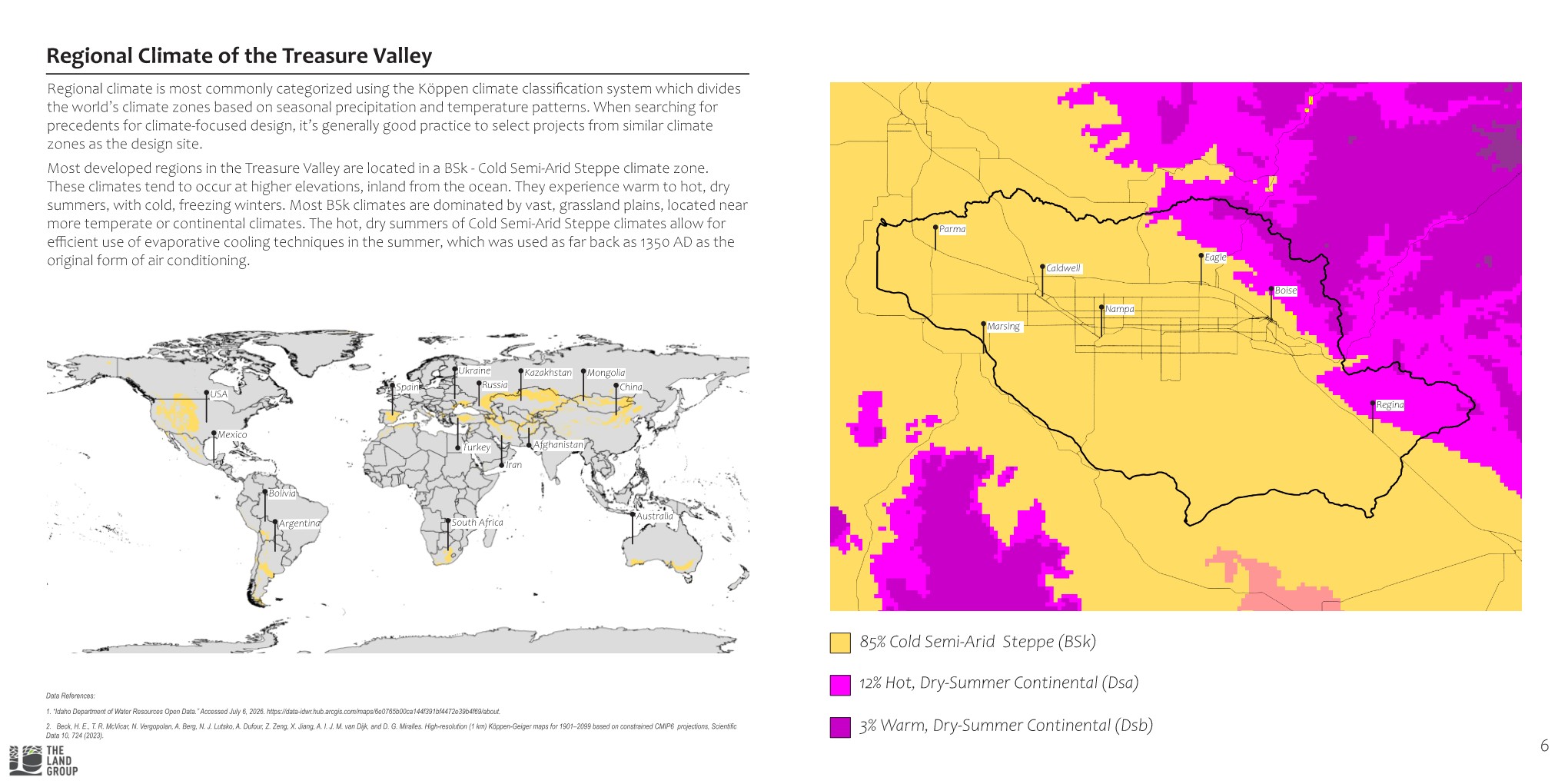
Outdoor comfort is often treated as a seasonal concern rather than a design opportunity. Yet, as temperatures rise and urban development increases, choices about shade, materials, water, vegetation, and site configuration shape how people experience outdoor spaces. Focused on the Treasure Valley’s cold semi-arid climate, the project explored how landscape architecture and civil design can respond by designing with these factors to create more comfort throughout the year, for everyone.
Process
Process
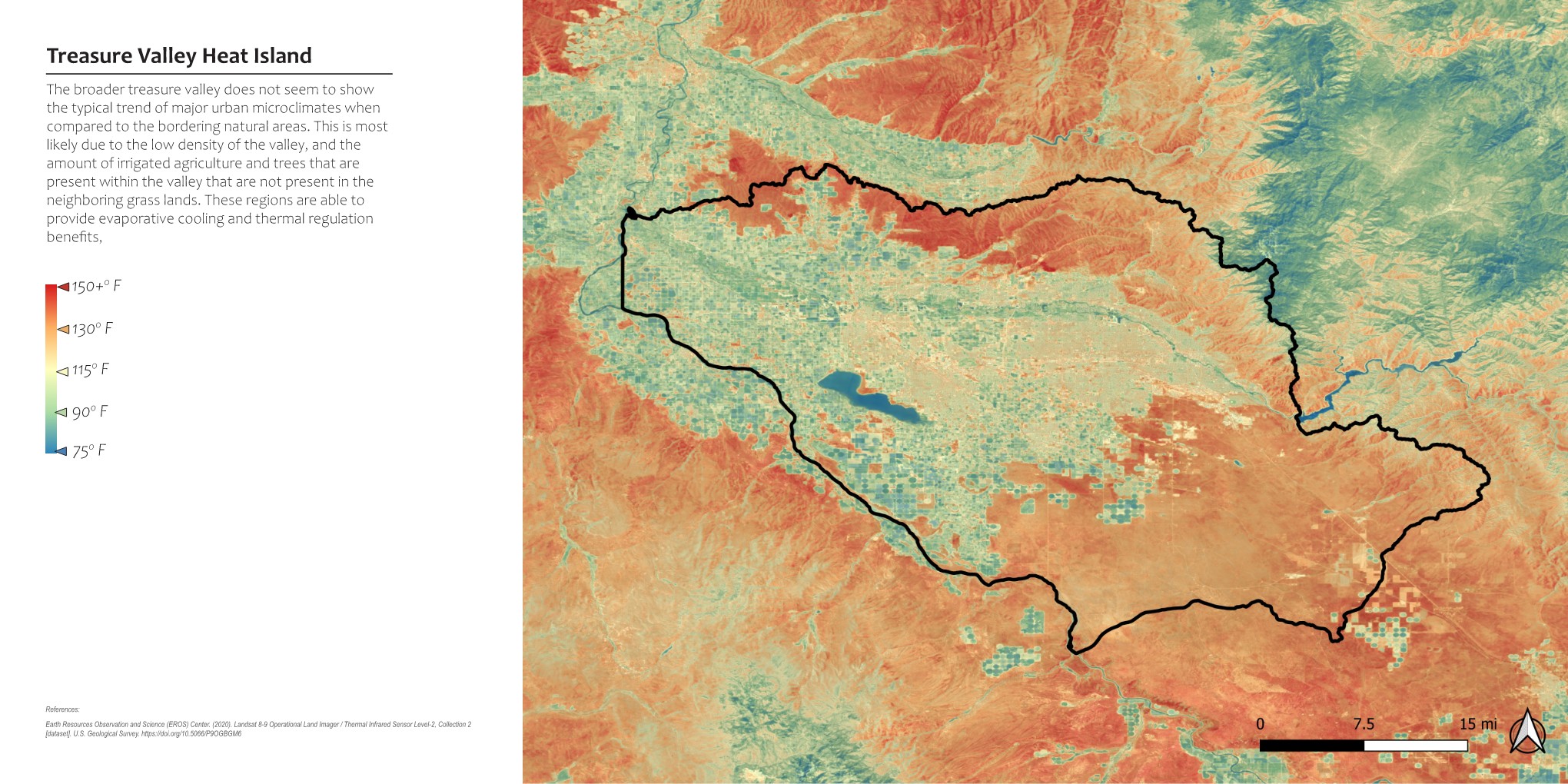
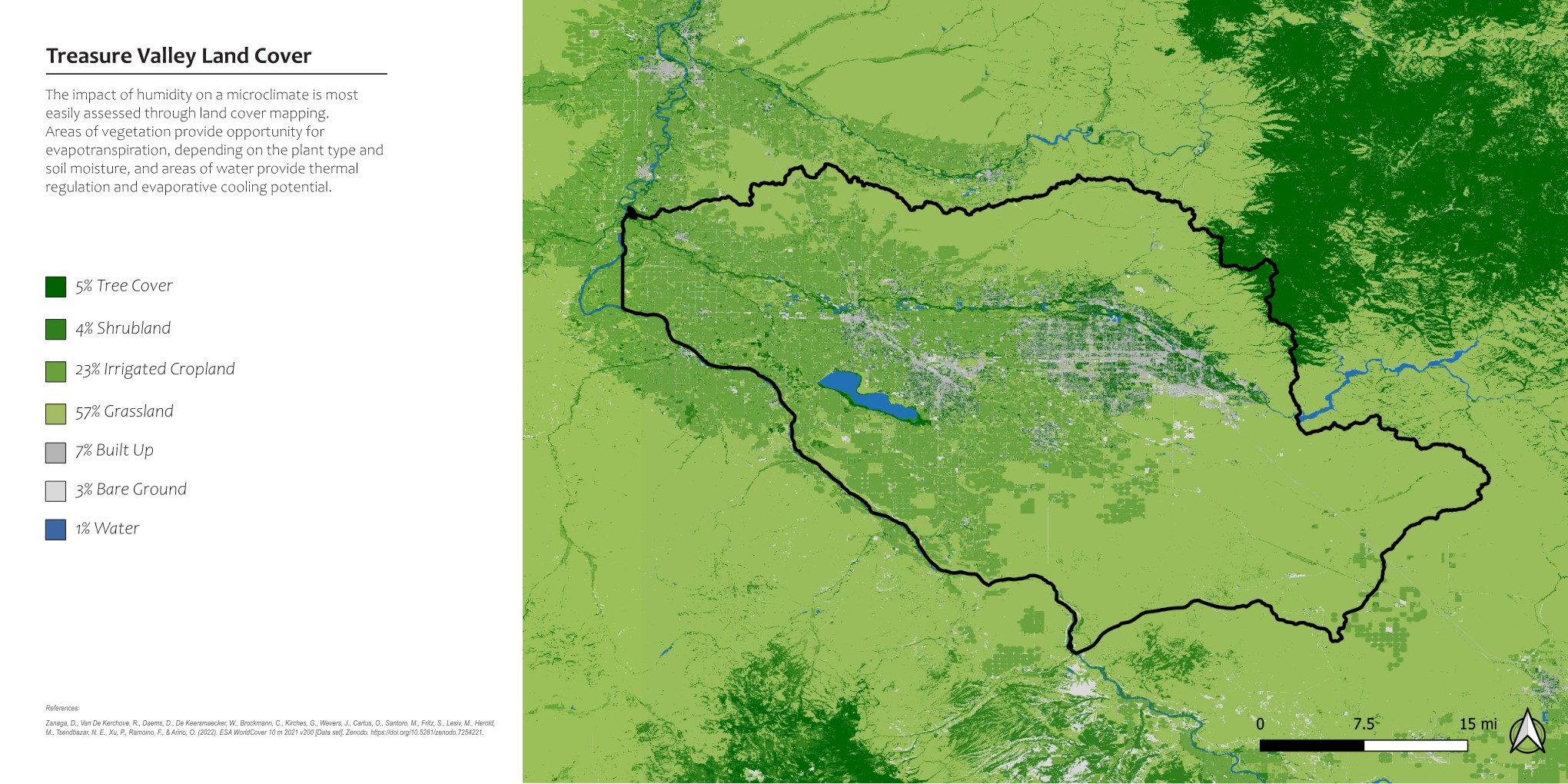
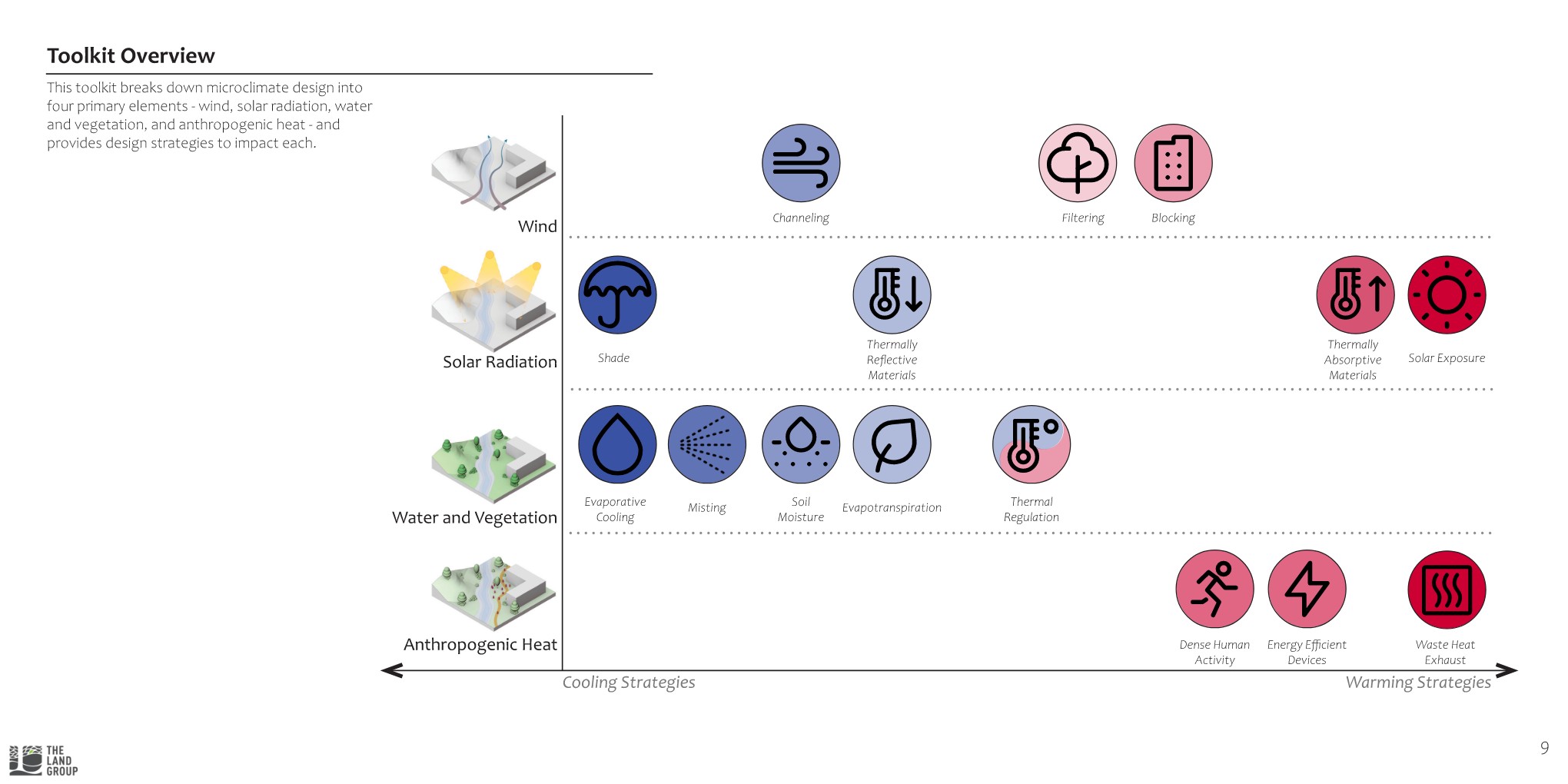
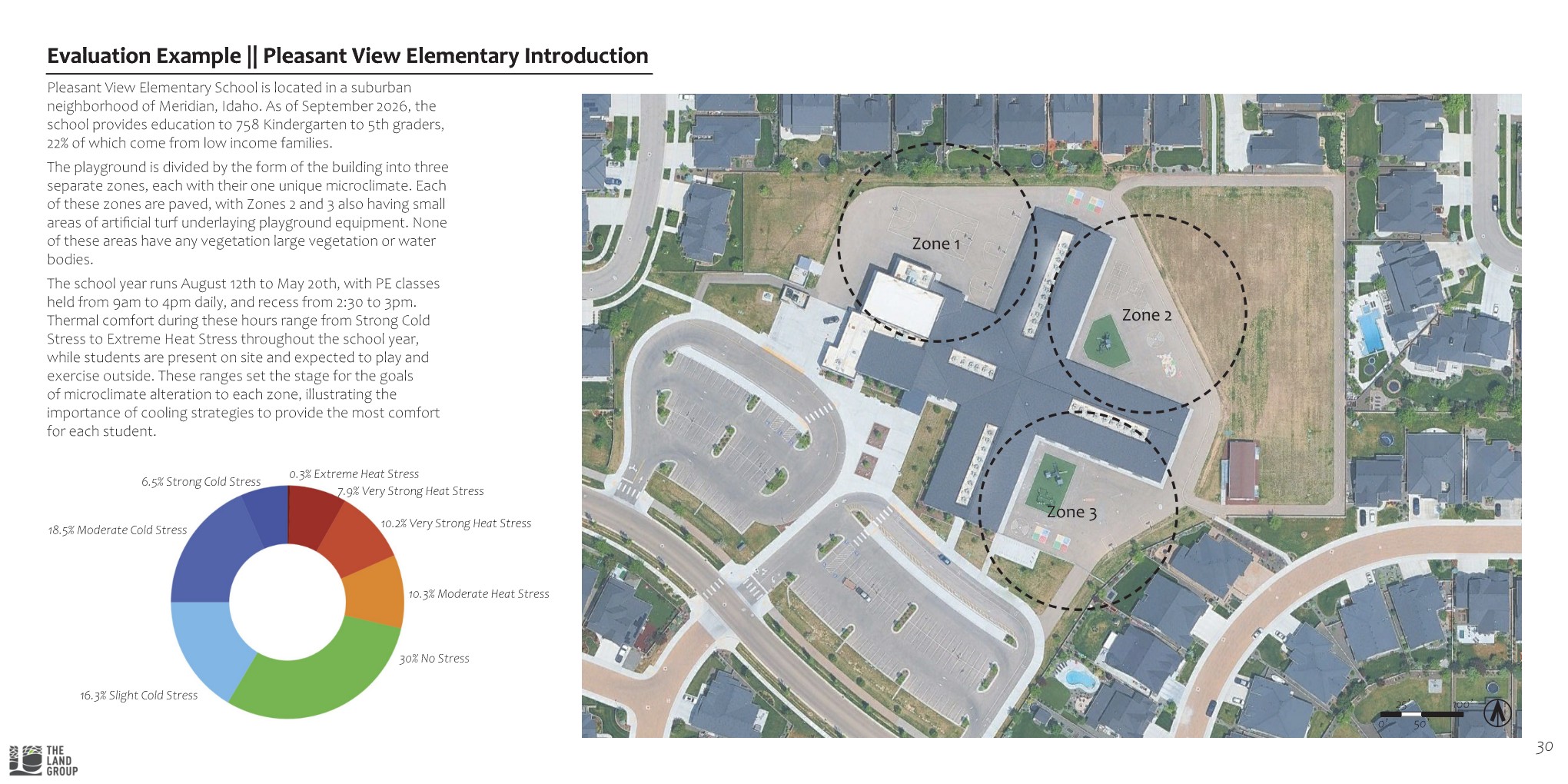
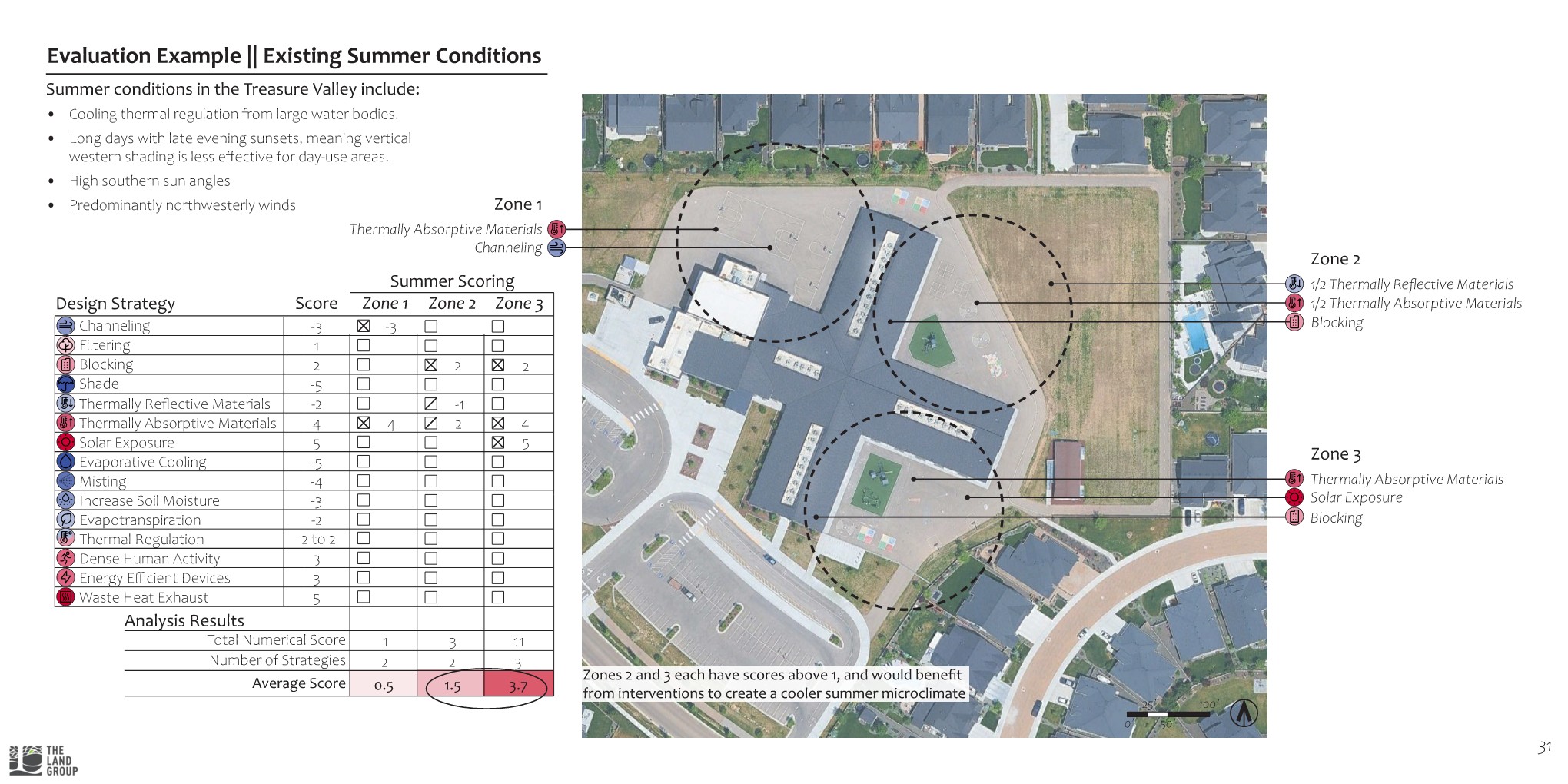
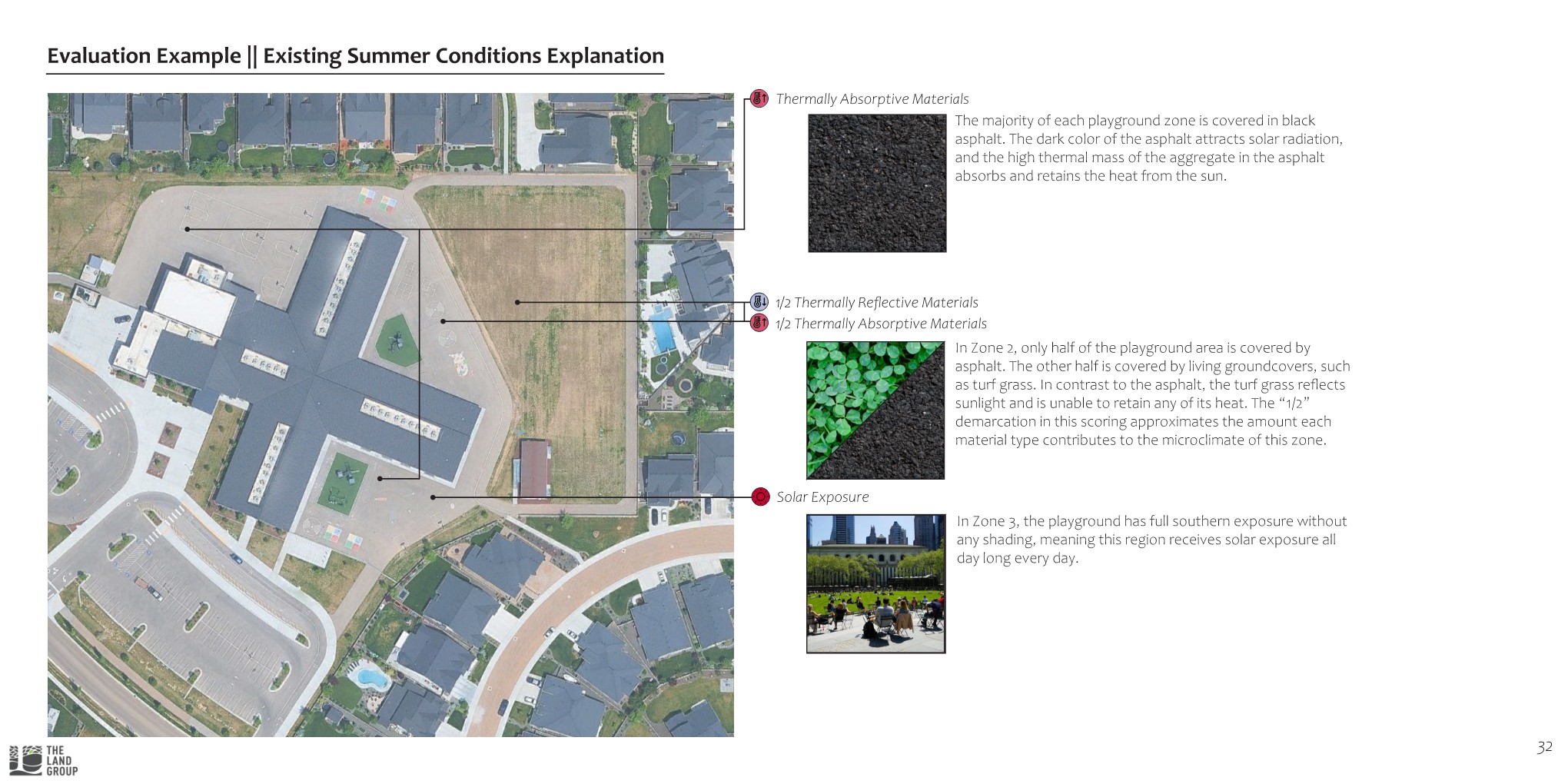
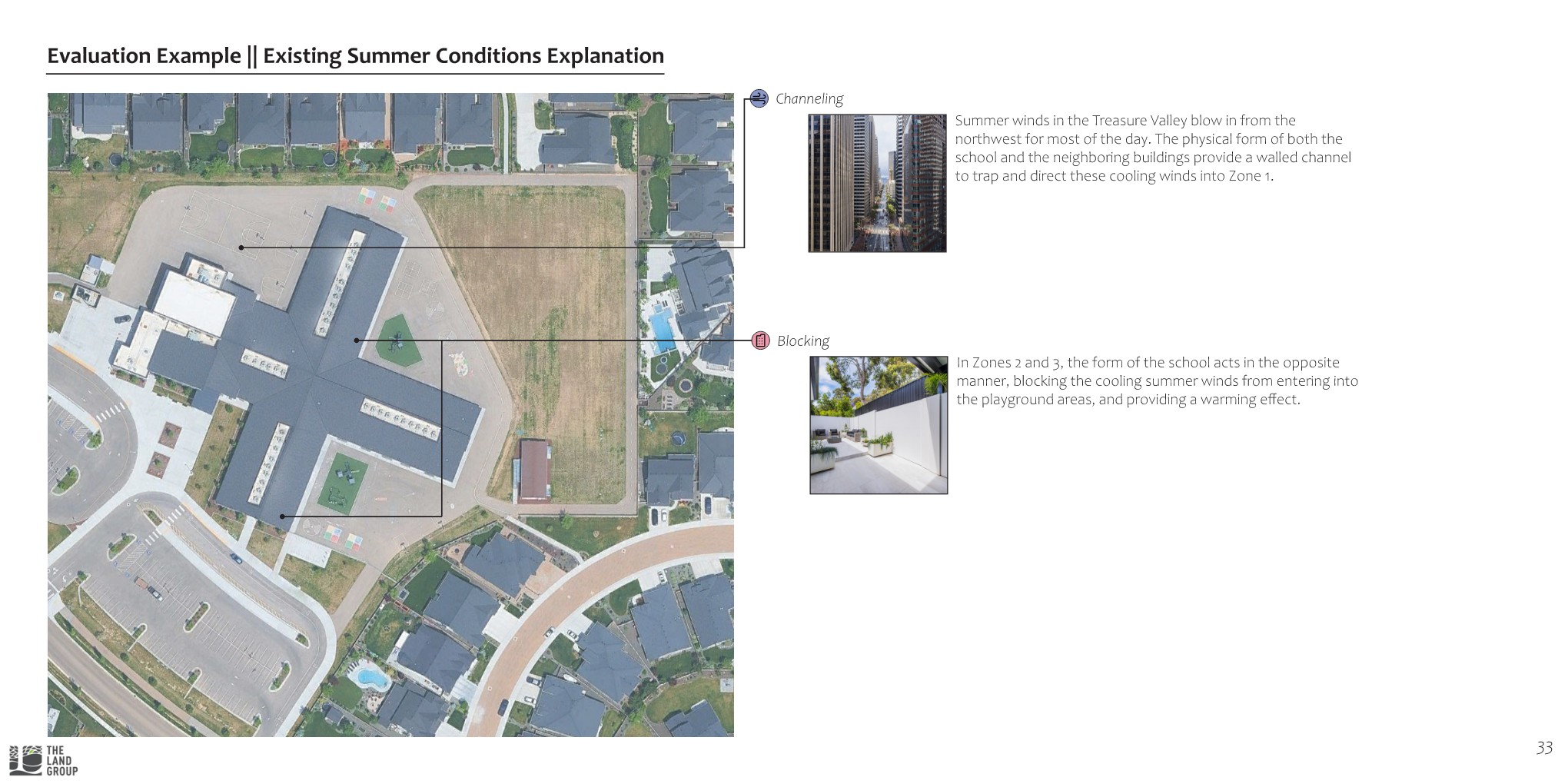
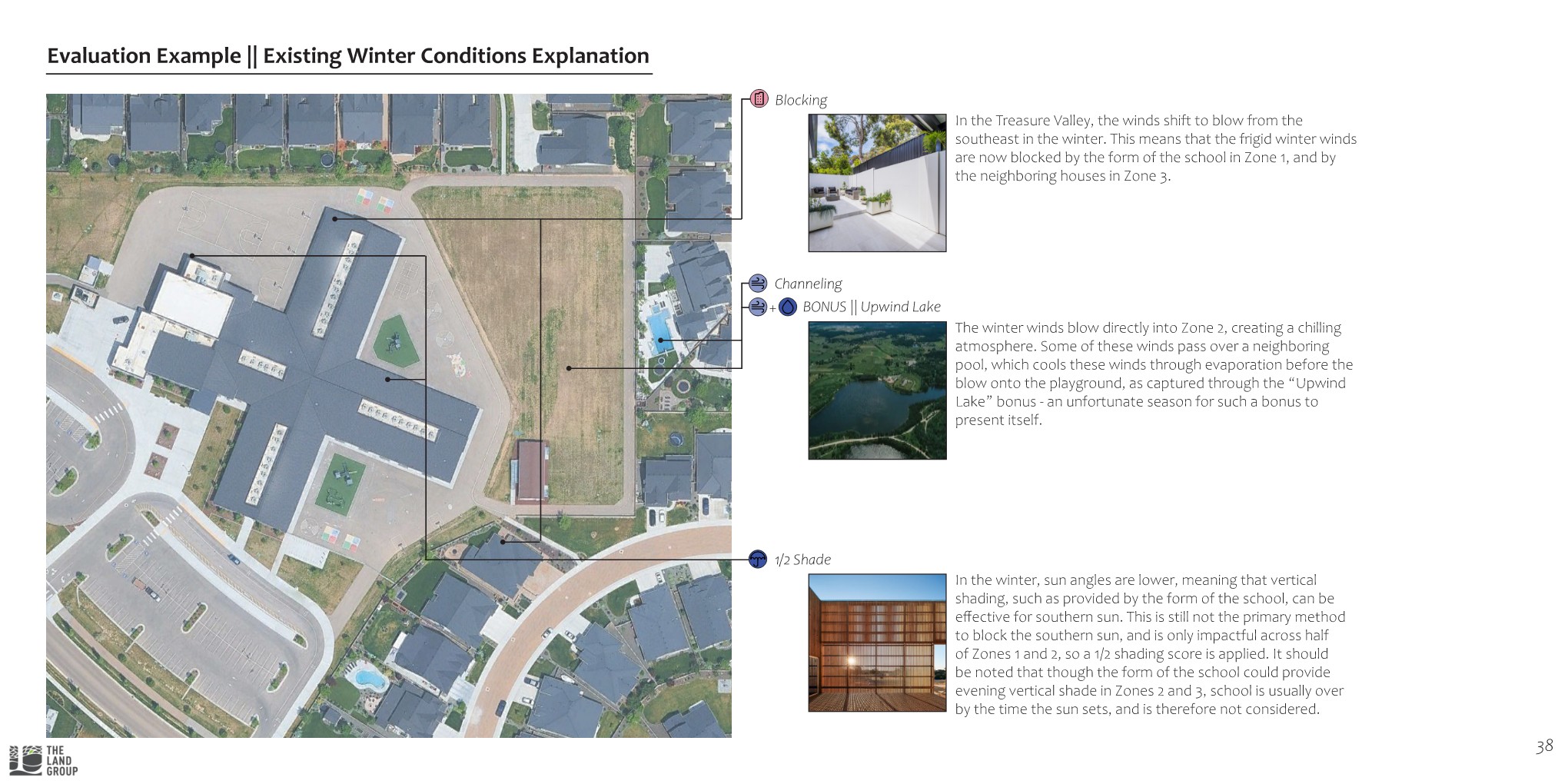
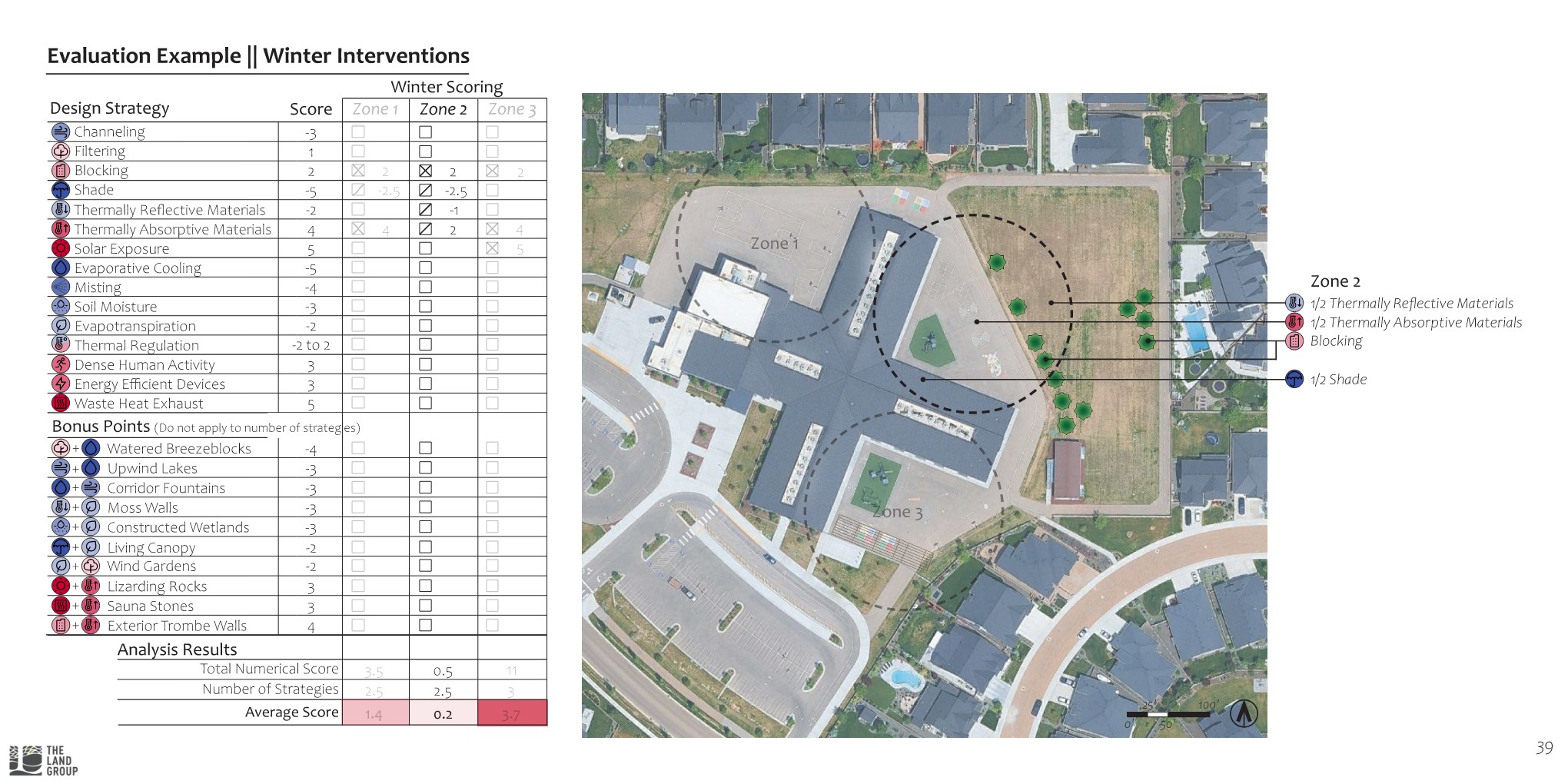
The interns began by studying climate and microclimate fundamentals and mapping Treasure Valley heat and land-cover patterns. They then translated relationships among wind, solar radiation, water and vegetation, and human-generated heat into implementable design strategies. To make the research usable, the team created seasonal scoring and site-assessment methods and tested the framework across three distinct playground zones at Pleasant View Elementary School.
Solution
Solution
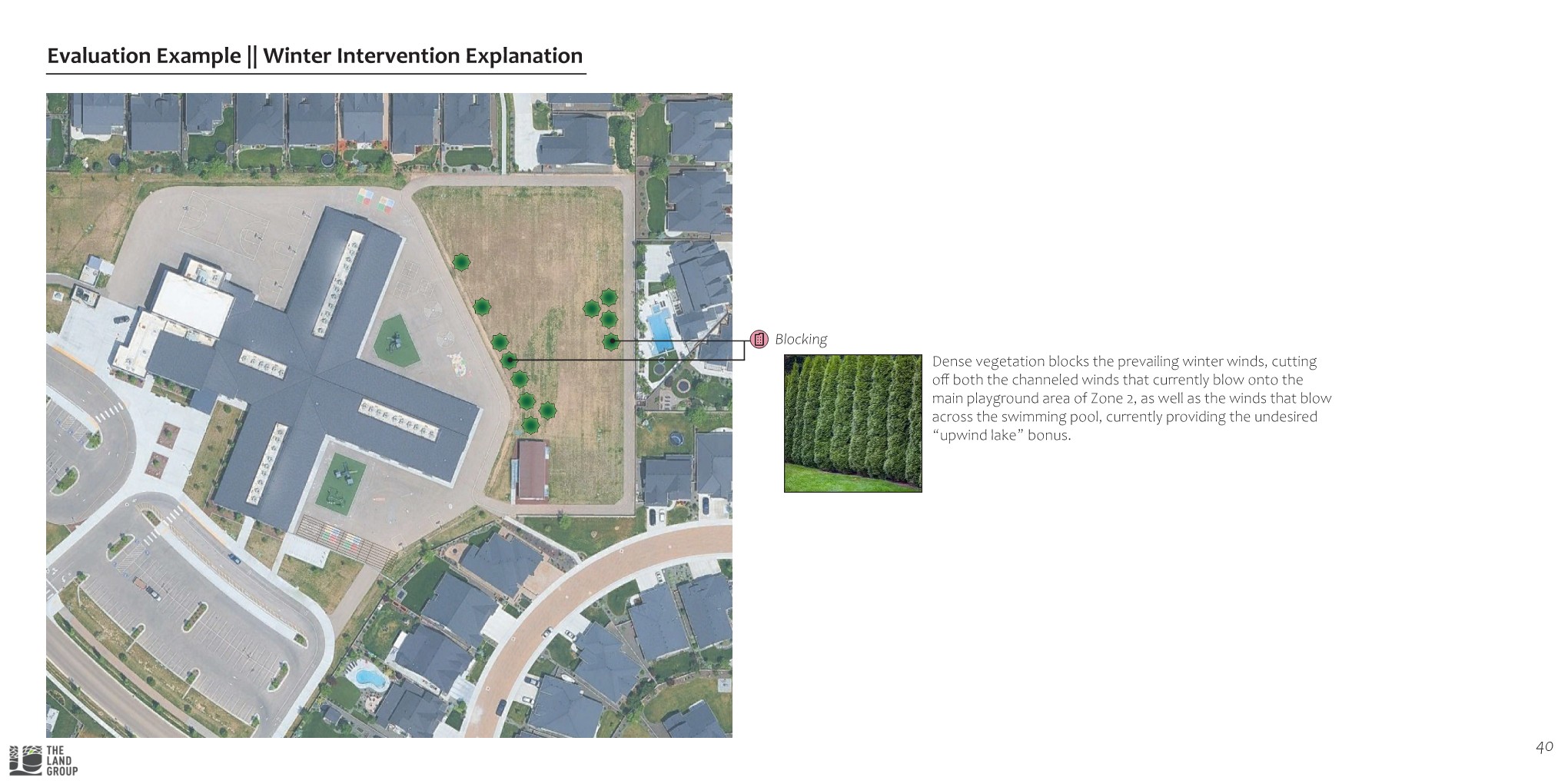
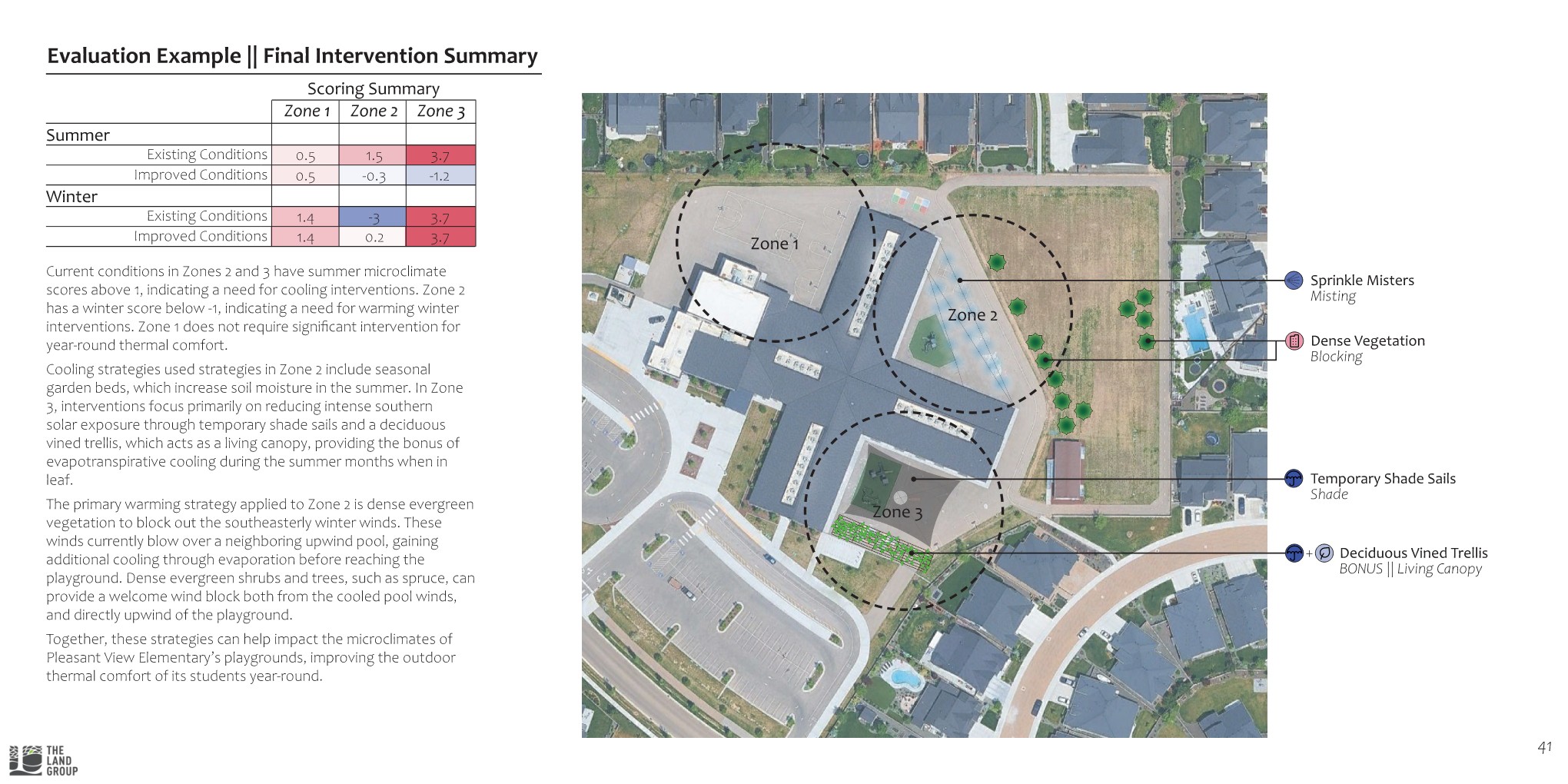
The result is a design toolkit that turns microclimate research into a clear, decision-making process. Each strategy includes placement guidance, seasonal effects, relative rankings, and compatible combinations, while the worksheet helps designers evaluate existing conditions, identify where cooling or warming is needed, and refine interventions for year-round comfort. The school example shows how strategies such as temporary shade sails, a deciduous vined trellis, seasonal misting, and dense evergreen vegetation can work together across changing seasonality.
Impact
Impact
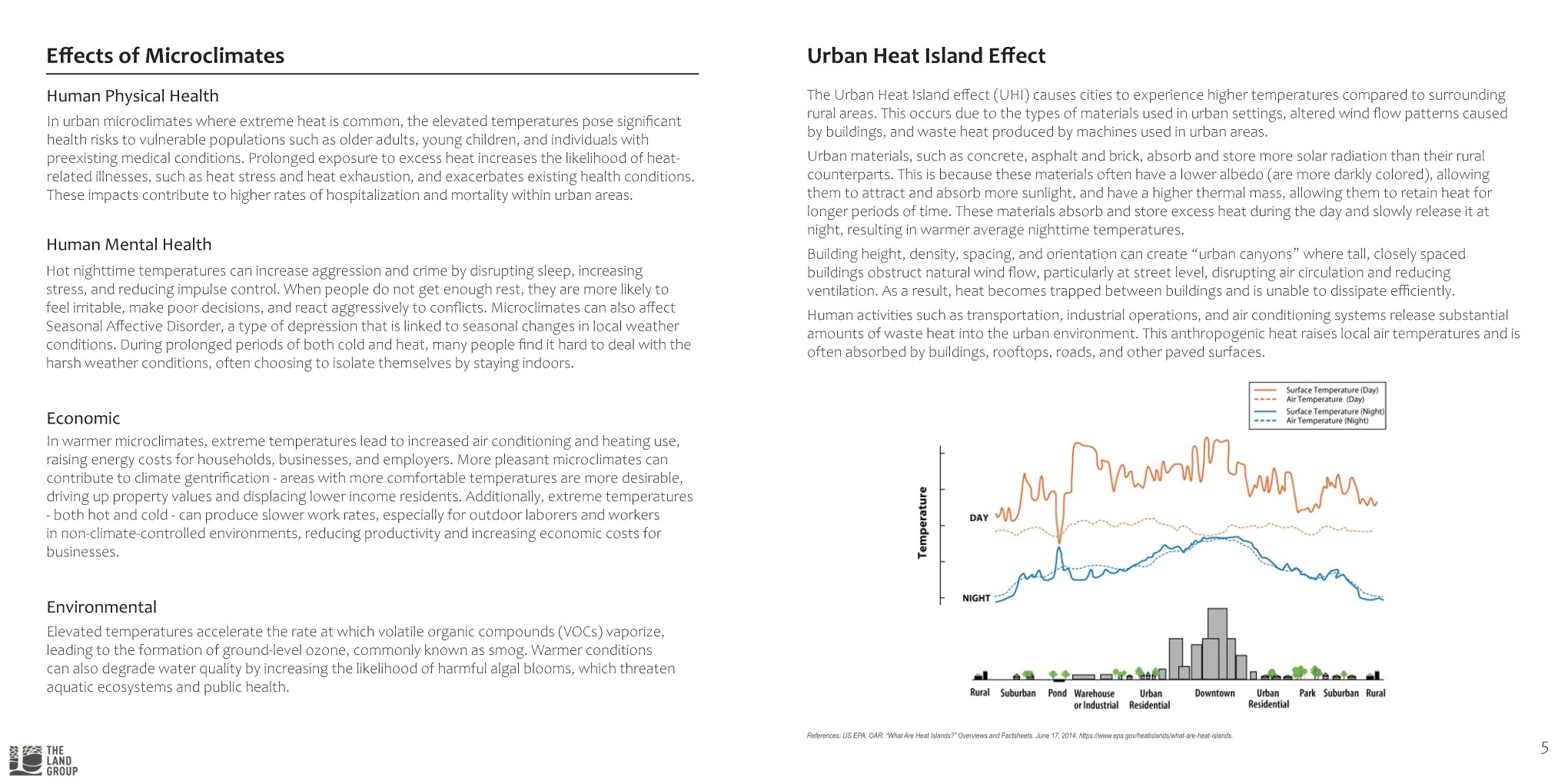
The toolkit encourages project teams to consider microclimate earlier, when site planning decisions can have the greatest influence. Revealing and evaluating invisible forces such as wind, radiant heat, evaporation, and waste heat, supports collaboration between landscape architecture and civil design. More importantly, it offers a path toward outdoor spaces that invite comfortability across seasons.